China’s Bold Zero-Tariff Push Reshapes Africa Trade
China zero-tariff Africa shipping links are redefining trade by boosting exports, improving logistics, and deepening economic ties, but challenges remain for long-term gains.
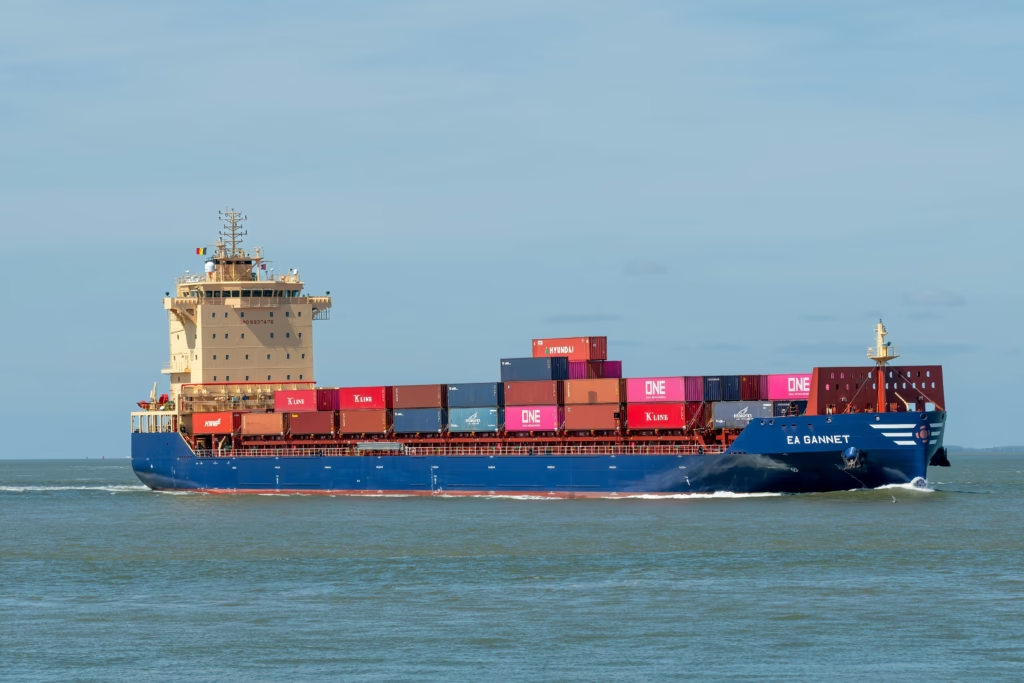
China’s latest trade strategy in Africa is not just about removing tariffs; it is about redesigning the entire trade ecosystem. At the heart of this shift lies a powerful combination: zero-tariff access for African goods and a strategic expansion of shipping and logistics networks linking African ports directly to Chinese markets. This dual approach is poised to reshape how Africa trades with the world, but it also raises deeper questions about dependency, competitiveness, and long-term economic transformation.
The China zero-tariff strategy marks a significant evolution in Beijing’s engagement with the continent. It goes beyond policy announcements and into the physical infrastructure that determines whether trade actually happens efficiently. While the removal of tariffs opens the door, shipping links determine whether African products can realistically walk through it.
China-Africa Trade Enters a New Era of Market Access
From May 1, 2026, China began implementing zero-tariff treatment for imports from 53 African countries with diplomatic ties, making it the first major economy to offer such comprehensive access unilaterally. This policy builds on earlier measures that already granted duty-free access to least developed African countries but now expands to include additional economies across the continent.
The implications are enormous. African exporters, from Kenyan tea farmers to Ghanaian cocoa producers, can now sell into one of the world’s largest consumer markets without facing import duties. The scale of opportunity is reflected in trade figures: China-Africa trade reached approximately $348 billion in 2025, continuing its upward trajectory.
However, market access alone does not guarantee increased exports. Historically, Africa’s share of exports to China has remained dominated by raw materials such as oil and minerals. The zero-tariff policy aims to change that by encouraging value-added goods, including processed agricultural products and manufactured items.
Yet this ambition hinges on a crucial factor: logistics.
Maritime Logistics Africa: The Real Engine Behind Trade Growth
China’s strategy recognizes a fundamental truth often overlooked in trade policy discussions: goods must move efficiently to markets. This is where maritime logistics becomes central to the China zero-tariff for Africa shipping framework.
Beijing has been actively expanding its presence in African ports while encouraging shipping lines to establish more direct routes between Africa and China. New shipping corridors and port investments are designed to reduce transit times, lower freight costs, and improve reliability.
Direct shipping routes are particularly important for perishable goods such as avocados, flowers, and fresh produce, key export sectors for countries like Kenya. Without faster and more predictable shipping, these products cannot compete effectively in distant markets like China.
The emphasis on logistics reflects a broader strategic shift. Trade is no longer just about agreements; it is about infrastructure ecosystems. Ports, shipping lines, customs efficiency, and inland transport networks all determine whether zero tariffs translate into real economic gains.
Zero-Tariff Policy Africa: Strategic Intent Behind the Move
China’s zero-tariff initiative is often framed as a development-oriented policy, but it also carries significant geopolitical and economic motivations. By offering duty-free access, China strengthens its position as Africa’s largest trading partner and deepens its influence across the continent.
Officials have emphasized that the policy aims to “boost trade” and help Africa access opportunities in the Chinese market. But beyond this, the move aligns with China’s broader strategy of building an integrated Global South economic network.
At a time when protectionism is rising in parts of the world, China is positioning itself as a champion of open trade, particularly for developing economies. This creates a contrast with Western markets, where African exports often face stricter standards and tariffs.
However, this strategy is not purely altruistic. By strengthening trade ties, China also secures supply chains for critical resources, expands markets for its own goods, and reinforces political alliances.
Africa Exports to China: Opportunities and Structural Challenges
The immediate beneficiaries of the zero-tariff policy are likely to be sectors where Africa already has a competitive edge. Agricultural exports such as tea, coffee, nuts, and horticultural products are expected to see significant growth.
For countries like Kenya, this could translate into increased foreign exchange earnings and improved rural livelihoods. Small and medium-sized enterprises may also benefit from reduced trade barriers, enabling them to enter the Chinese market for the first time.
However, structural challenges remain. African economies often struggle with limited industrial capacity, inconsistent quality standards, and inadequate export infrastructure. Without addressing these issues, the benefits of zero tariffs may be unevenly distributed.
There is also the risk of reinforcing existing trade patterns. If Africa continues to export primarily raw materials while importing finished goods from China, the trade imbalance could persist or even deepen.
China’s Infrastructure in Africa: Building the Trade Backbone
Infrastructure development is a cornerstone of China’s engagement in Africa, and it plays a critical role in the success of the zero-tariff initiative. Over the past two decades, China has financed and constructed ports, railways, highways, and logistics hubs across the continent.
These investments are now being leveraged to support increased trade flows. Improved port capacity and connectivity can significantly reduce bottlenecks, making it easier for African exporters to reach global markets.
The integration of infrastructure with trade policy highlights a key advantage of China’s approach: coordination. By aligning tariffs, logistics, and investment, China creates a comprehensive framework for trade expansion.
However, this model also raises concerns about debt sustainability and economic sovereignty. Some African countries have accumulated significant debt through infrastructure projects, leading to debates about long-term financial risks.
The Role of Shipping Links in Unlocking Trade Potential
Shipping links are not just a logistical detail; they are the linchpin of the entire strategy. Without efficient maritime connections, zero tariffs would remain largely symbolic.
China’s push to enhance shipping connectivity includes increasing the frequency of cargo routes, improving port efficiency, and investing in digital logistics systems. These measures aim to create a seamless trade corridor between Africa and China.
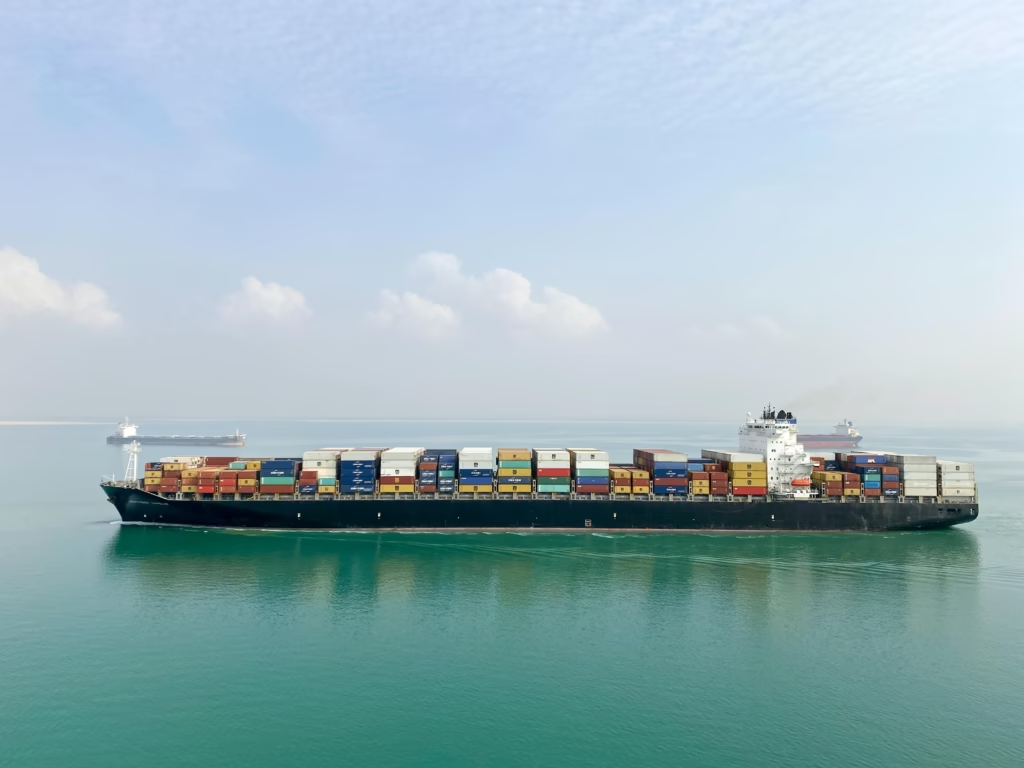
For exporters, this means shorter delivery times, lower costs, and greater predictability, factors that are essential for competing in global markets. For China, it ensures a steady flow of goods and strengthens its role as a central hub in global trade networks.
Economic Impact: A Catalyst for Growth or Dependency?
The economic impact of the China zero-tariff Africa shipping strategy is likely to be significant, but not uniformly positive. There will be increased exports that can drive economic growth, create jobs, and boost incomes.
However, there is a risk of dependency. If African economies become overly reliant on the Chinese market, they may be vulnerable to changes in demand or policy shifts.
Diversification will be key. African countries must use the opportunities created by zero tariffs to expand their industrial base, move up the value chain, and develop new export sectors.
The Global Context: Trade Wars and Strategic Positioning
China’s zero-tariff policy also reflects broader global dynamics. As trade tensions and protectionist measures increase in other regions, China is positioning itself as an alternative partner for developing economies.
This strategy enhances China’s soft power and strengthens its influence in international institutions. It also aligns with initiatives such as the Belt and Road, which aim to create interconnected trade networks across continents.
For Africa, this presents both opportunities and challenges. While access to the Chinese market can drive growth, it also requires careful navigation to ensure balanced and sustainable partnerships.
A Defining Moment for Africa-China Trade
The China zero-tariff strategy represents a pivotal moment in Africa-China relations. By combining tariff elimination with logistics expansion, China is addressing both the policy and practical barriers to trade.
The potential benefits are substantial: increased exports, improved infrastructure, and deeper economic integration. However, the long-term impact will depend on how African countries respond.
To fully capitalize on this opportunity, Africa must invest in industrialization, improve quality standards, and diversify its export base. Only then can the zero-tariff policy become a catalyst for sustainable development rather than a short-term boost.
Ultimately, this is more than a trade policy; it is a test of Africa’s ability to transform opportunity into lasting economic progress.
About The Author