Shocking Fuel Policy Shift: Government Lowers Gasoline Regulations Amid Supply Difficulties
The government lowers gasoline regulations amid supply difficulties, allowing sulfur levels up to 50 mg/kg. Here’s what it means for the economy, environment, and public health.

The government’s decision to temporarily lower gasoline rules has launched a heated debate in economic, environmental, and public health circles. Authorities have granted a six-month waiver allowing the import of gasoline and diesel with up to 50 mg/kg of sulfur, effectively reverting to earlier, less stringent fuel standards, to mitigate the country’s impending fuel shortage.
The policy shift comes as global supply chains are under huge pressure, not least from geopolitical tensions along key oil routes. While the measure is framed as a necessary move to stabilize fuel availability and protect economic activity, it also raises critical issues about air quality, long-term sustainability and hidden costs of short-term fixes.
Global Fuel Supply Crisis and Policy Response
The backdrop to this decision is a growing global fuel supply crisis driven by geopolitical instability, particularly in the Middle East. Disruptions in critical supply routes such as the Strait of Hormuz, through which a significant portion of global oil flows, have made it increasingly difficult for countries to access compliant low-sulfur fuel.
As a result, petroleum importers have struggled to secure adequate supplies that meet modern environmental standards. Faced with the risk of fuel shortages, long queues at petrol stations, and potential economic paralysis, the government opted for a pragmatic, though controversial, solution: temporarily relaxing fuel quality requirements.
Officials emphasized that the decision followed consultations with regulatory bodies and industry stakeholders, including standards authorities and energy ministries. The primary objective was clear: ensure uninterrupted fuel supply to keep transportation, manufacturing, and electricity generation running smoothly.
Fuel Quality Standards Relaxation Explained
At the heart of the policy is the fuel quality standards relaxation, which allows sulfur levels in gasoline and diesel to rise to a maximum of 50 mg/kg. Previously, stricter standards capped sulfur content at around 10 mg/kg, reflecting a global shift toward cleaner fuels.
Sulfur content in fuel is a critical metric because it directly affects emissions. Lower sulfur fuels burn cleaner, producing fewer pollutants and enabling modern emission-control technologies in vehicles to function effectively. By reverting to higher sulfur thresholds, the government is effectively widening the pool of available fuel imports, making it easier for suppliers to meet demand.
This rollback is not unprecedented. Several countries facing similar supply pressures have implemented temporary relaxations of fuel standards. However, such measures are typically framed as emergency responses rather than long-term policy shifts.
Economic Impact of Fuel Regulation Changes
The economic impact of fuel regulation changes is perhaps the most immediate and visible aspect of this policy. Fuel is the lifeblood of modern economies, powering transportation networks, industrial production, and energy generation. Any disruption in supply can trigger cascading effects across multiple sectors.
By allowing higher-sulfur fuel imports, the government aims to stabilize supply and potentially ease upward pressure on fuel prices. Increased availability of fuel cargoes from global markets could help prevent price spikes and ensure that businesses continue operating without interruption.
In the short term, this move is likely to prevent severe economic disruptions. Transport costs may stabilize, supply chains may remain intact, and inflationary pressures linked to fuel shortages could be mitigated.
However, the long-term economic implications are more complex. Lower-quality fuel can lead to higher maintenance costs for vehicles and machinery, particularly those designed for cleaner fuel standards. This could translate into increased operational costs for businesses and consumers alike, offsetting some of the short-term economic gains.
Environmental Effects of High Sulfur Fuel
The environmental effects of high sulfur fuel represent one of the most significant concerns surrounding this policy shift. Higher sulfur content in fuel leads to increased emissions of sulfur dioxide and particulate matter, key contributors to air pollution.
Experts warn that even a temporary increase in sulfur levels can have noticeable impacts on air quality, particularly in urban areas with high traffic density. Over time, this will undermine progress made in reducing emissions and improving environmental standards.
Cleaner fuels have been a cornerstone of environmental policy in many countries, helping to reduce smog, acid rain, and greenhouse gas emissions. By stepping back from these standards, even temporarily, governments risk slowing down environmental progress and sending mixed signals about their commitment to sustainability.
Moreover, the cumulative effect of increased emissions over six months could have lasting consequences, particularly if similar measures are extended or repeated in the future.
Public Health Implications of Lower Fuel Standards
Closely linked to environmental concerns are the public health implications of lower fuel standards. Air pollution is a well-documented risk factor for a range of health conditions, including respiratory diseases, cardiovascular problems, and premature death.
Higher sulfur fuels produce more pollutants that can exacerbate conditions such as asthma and chronic obstructive pulmonary disease (COPD). Vulnerable populations, including children, the elderly, and those with pre-existing health conditions, are particularly at risk.
While the government has emphasized the temporary nature of the policy, health experts caution that even short-term increases in pollution can have measurable impacts on public health. Increased healthcare costs, reduced productivity, and a decline in overall quality of life are potential consequences that must be carefully weighed against the economic benefits of the policy.
Energy Security and Government Strategy.
The decision to lower gasoline regulations highlights a broader issue: energy security strategy. Governments must constantly balance the need for reliable energy supply with environmental and health considerations.
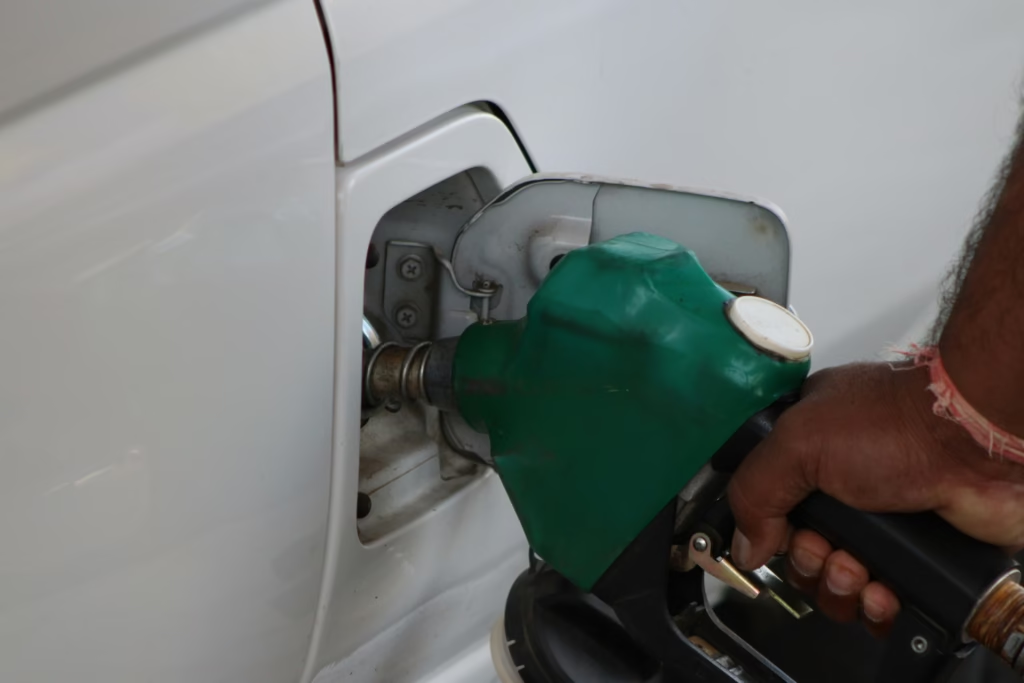
In this case, the priority has clearly been supply security. Ensuring that fuel remains available is critical for maintaining economic stability and preventing social disruption. Fuel shortages can lead to widespread panic, economic slowdown, and even political instability.
However, this strategy also exposes vulnerabilities in the country’s energy system. Heavy reliance on imported fuel makes the economy susceptible to external shocks, such as geopolitical conflicts and supply chain disruptions.
The current situation underscores the importance of diversifying energy sources, investing in renewable energy, and building strategic fuel reserves. Without such measures, countries may find themselves repeatedly forced into similar trade-offs in the future.
Balancing Short-Term Relief and Long-Term Sustainability
The government’s move is a classic policy dilemma: trade-off between short-term relief and long-term sustainability. On the one hand, there is no question about the pressing need to avoid fuel shortages and protect the economy. But one should not overlook the environmental and health costs of lowering fuel standards.
That six-month window suggests that the authorities are treating this as a temporary change and not a permanent one. How fast global supply conditions will stabilize will be key to how effective this approach will be.
If the supply disruptions last longer than six months, the government could confront difficult decisions about whether to prolong the waiver or return to stricter standards. Both options carry serious implications for the economy, the environment, and the public health.
Lessons from Global Trends
Globally, similar policy responses have been observed in countries facing fuel supply constraints. Temporary relaxation of fuel standards is often used as a stopgap measure to ensure supply continuity.
However, these measures are typically accompanied by efforts to strengthen long-term energy resilience, such as investing in alternative energy sources and improving supply chain infrastructure.
The current situation offers valuable lessons for policymakers. It highlights the need for proactive planning, robust energy policies, and a clear roadmap for transitioning to sustainable energy systems.
A Necessary Compromise or Risky Gamble?
Slashing gasoline regulations in the face of supply woes is a risky bet, and a necessary compromise. In the short term it solves a critical problem of ensuring fuel availability and avoiding economic disruption.
But the long-term implications are much more complex. The increased emissions, potential health risks and loss of environmental benefits all pose serious questions about the true cost of this policy.
The government’s handling of the transition back to tougher standards after this period of six months will determine the ultimate success of this measure. It will also depend on whether this experience will lead to a deeper rethink of energy policy and a stronger commitment to sustainable solutions.
In an uncertain world, the challenge for policymakers is clear: how to address immediate crises without compromising the future.
About The Author