All or Nothing Manchester United’s documentary exposes an uncomfortable reality.
Damning Manchester United’s All or Nothing documentary promises unprecedented access to Old Trafford, Carrington and the dressing room. But at a club desperate to restore footballing credibility, the decision raises uncomfortable questions about priorities, commercialisation and whether United has become too focused on selling its story instead of fixing its football.
Manchester United has opened another extraordinary chapter in its post-Sir Alex Ferguson existence by agreeing to become the latest club featured in Amazon Prime Video’s All or Nothing documentary franchise. The series will follow the entire 2026/27 season, with cameras given unprecedented access to Old Trafford, the dressing room, and the club’s new Carrington Training Complex before the program launches globally on Prime Video in summer 2027. Amazon says the documentary will follow United as the club returns to the Champions League and attempts to build on the improvement achieved during the 2025/26 campaign, which many fans believe success was heavily brought about by a few players and not a collective team performance.
At first glance, there is nothing inherently wrong with the decision. Manchester United is one of the world’s biggest sporting institutions, and allowing supporters to see what happens behind the scenes could produce an extraordinarily compelling documentary. The club has spent years operating under intense scrutiny while maintaining a relatively controlled approach to what happens inside its football environment. Giving millions of supporters access to the dressing room, Carrington and the people responsible for running the club could therefore be viewed as an attempt to reconnect Manchester United with its global audience.
But that explanation does not remove the uncomfortable questions surrounding the decision. Manchester United supporters have spent more than a decade watching their club struggle to reproduce the sporting standards that once made it the dominant force in English football. Managers have come and gone, recruitment strategies have repeatedly changed, football departments have been restructured, and enormous sums have continued to flow through the commercial operation. Against that backdrop, the arrival of Amazon cameras inevitably creates a suspicion that United is once again putting commercial visibility ahead of the less glamorous business of building a consistently elite football team.
That suspicion should not automatically be treated as unfair or cynical. Manchester United and Amazon have openly presented the project as a major commercial and entertainment opportunity. Specialist sports-business reporting describes the agreement as a record-breaking deal that eclipses the fees associated with previous Premier League editions involving Manchester City, Arsenal, and Tottenham, although the exact value has not been publicly disclosed by the club or Amazon. The money is therefore real business, not an act of charity towards supporters, and that distinction matters when judging whether this is genuinely about football culture or simply another way of monetizing Manchester United’s extraordinary global appeal.
The biggest question is consequently not whether the documentary will make money. It almost certainly will. The bigger question is whether Manchester United has reached a point where the football should finally be allowed to speak louder than the commercial machine surrounding it.
Manchester United has already sold its story for years.
The uncomfortable irony is that Manchester United does not need a documentary to convince the world that it is important. The club has been one of football’s greatest global brands for decades, with a history containing some of the most successful teams, iconic players, and dramatic moments in English football. Amazon itself describes United as a club with 146 years of history, 69 major trophies, and a global following of more than one billion people. The commercial value of that heritage is obvious, but it is also precisely where the problem begins.
Manchester United’s history has become such a powerful commercial asset that there is a danger the club can continue benefiting from what it achieved in the past even when its present does not justify the same level of sporting prestige. The name remains enormous, the shirts continue to sell, global audiences continue to watch, and sponsors continue to see value in association with the club. Yet none of those things can substitute for what ultimately defines a football institution: the quality of its team and its ability to compete for major honours.
This is why some supporters are uncomfortable with All or Nothing. Their frustration is not necessarily directed at Amazon itself. It is directed at the broader perception that Manchester United has become increasingly sophisticated at monetising its identity while remaining frustratingly inconsistent at restoring its footballing standards. A documentary can generate revenue, global engagement and publicity, but it cannot make a poorly constructed squad better. It cannot transform recruitment. It cannot improve tactical organisation. It cannot turn promising players into elite performers. It cannot win the Premier League.
That distinction should be impossible for the club hierarchy to ignore. Manchester United’s commercial operation is not inherently the enemy of sporting success. In fact, commercial strength can help fund the football operation and provide resources for infrastructure, recruitment and player development. The problem arises when commercial success becomes a measure of progress in itself. A record documentary fee may look impressive on a financial spreadsheet, but supporters will reasonably ask whether the club would rather have that record fee or a Premier League title.
The correct answer should be obvious.
The 2026/27 season makes this documentary a particularly dangerous gamble.
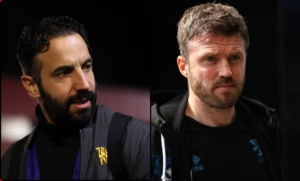
The timing of the project makes it far more significant than a conventional behind-the-scenes sports documentary. Manchester United is entering the 2026/27 season after a dramatic turnaround under Michael Carrick, who took over during the 2025/26 campaign and helped transform United’s league position. The Premier League reported that Carrick won 11 of his 16 matches after taking charge, lifting United from seventh to third and securing Champions League qualification.
That achievement provides a legitimate reason for optimism, but it also means expectations have changed. Carrick is no longer simply the caretaker figure who rescued a damaged season. He is now responsible for establishing whether the improvement can become a sustainable footballing project. Manchester United’s next campaign therefore carries enormous sporting significance regardless of whether Amazon’s cameras are present.
The documentary will be watching that experiment from the inside.
That could ultimately become its greatest strength or its greatest weakness. If Carrick succeeds, Amazon will have extraordinary material. Viewers will be able to watch a manager with deep personal ties to Manchester United attempt to restore the standards he experienced as a player. They will see a club returning to Europe’s elite competition and trying to rebuild itself into a genuine contender. They could witness the emergence of young players, important victories, major Champions League nights and perhaps even a trophy-winning campaign.
But football does not follow television scripts.
If the 2026/27 season goes badly, the same cameras will capture the opposite story. Tactical problems, dressing-room disagreements, recruitment frustrations, selection disputes, injuries, pressure on the manager and poor results could all become part of a globally distributed narrative. That is the fundamental risk Manchester United has accepted. The club is effectively allowing an entertainment company to document one of the most consequential football seasons in its recent history without knowing whether the story will end in triumph or embarrassment.
That does not make the agreement foolish. It makes it extraordinarily bold.
The Manchester United documentary is a commercial product first.
There should be no confusion about what All or Nothing actually is. It is a documentary franchise produced for entertainment. Its commercial success depends upon access, personalities, conflict, emotion and storytelling. Amazon’s own announcement promises viewers the “emotional highs and lows” of life inside Manchester United while highlighting access to the dressing room and the inner workings of the club.
That is precisely what viewers want, and it is precisely what Manchester United must manage carefully.
A football dressing room is not naturally designed for television. Managers need to have difficult conversations. Players need to receive criticism. Coaches need to challenge individuals. Senior players need to address younger teammates. Recruitment executives need to discuss sensitive decisions. Players who are not selected need to deal with disappointment. Those things are normal in elite football, but they are not necessarily supposed to become entertainment for a worldwide audience.
The presence of cameras inevitably changes an environment, even when everyone involved is behaving professionally. People become more conscious of what they say and how they behave. Players may become more guarded. Staff may become more cautious. Managers may become more aware that apparently ordinary conversations could eventually be viewed by millions of people.
Manchester United’s hierarchy must therefore ensure that the documentary remains subordinate to the football operation. If the cameras ever become a distraction, they should be moved. If filming interferes with preparation, preparation should win. If the production requires access that compromises sporting priorities, the sporting priorities must take precedence.
That sounds obvious.
At Manchester United, however, supporters have heard promises about football coming first before. The club’s credibility will therefore depend on actions rather than statements.
Michael Carrick is the biggest sporting storyline in the entire project.
The most fascinating aspect of All or Nothing: Manchester United may not actually be the documentary itself. It may be Michael Carrick.
Carrick occupies a unique position in Manchester United history because he understands both the club that existed under Ferguson and the club that has struggled to reproduce those standards since Ferguson’s retirement. As a player, Carrick was part of one of the most successful periods in the club’s history, winning five Premier League titles and the Champions League among a long list of honours. He later became part of the coaching structure and eventually took responsibility for the first team.
His appointment therefore carries an emotional significance that a conventional external managerial appointment would not possess.
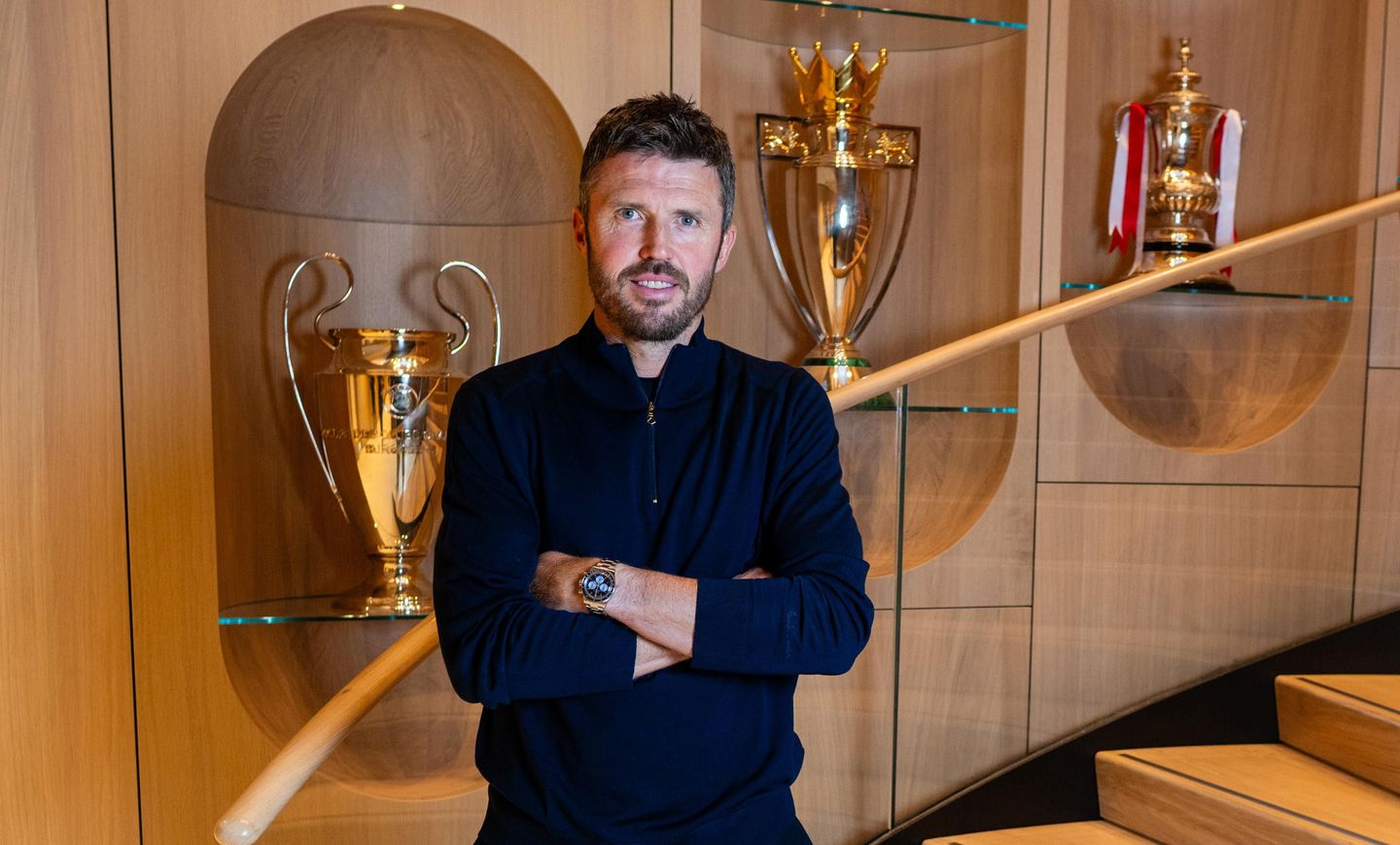
Carrick knows what Manchester United’s standards were supposed to look like because he experienced them personally. The documentary will now provide viewers with an unusual opportunity to observe whether he can translate that experience into a modern football operation capable of competing against the best teams in Europe.
That storyline could be enormously valuable if handled correctly. The cameras could show the reality behind rebuilding a giant football club rather than simply presenting a manufactured narrative. They could reveal the preparation, pressure, compromises and decisions that supporters rarely see.
But there is an important danger here too. Carrick cannot become the protagonist of a television programme at the expense of becoming the manager of Manchester United.
His job is not to provide dramatic speeches for Amazon. His job is to construct a team capable of competing for trophies. His success should be measured in performances, points, progression, tactical development and silverware rather than the quality of his documentary appearances.
The hierarchy must understand that distinction.
Manchester United’s heritage cannot be restored through television.
The argument about heritage is even more complicated.
Manchester United supporters are understandably protective of the club’s history because that history is central to the institution’s identity. The Busby era, the Ferguson years, European triumphs, domestic dominance, academy graduates and legendary players created a culture that cannot simply be reproduced through branding.
That culture was built through football.
It was built by winning.
It was built by developing players who understood what Manchester United represented and then demanding that they perform at the highest possible level. It was built by managers who were judged primarily by what happened on the pitch rather than by commercial engagement metrics.
That is why the documentary should not be mistaken for evidence of heritage being restored.
A documentary about Manchester United’s heritage is still a commercial product. It can tell stories about the club’s history, but it cannot recreate the environment that produced the greatest teams. The only meaningful way to restore Manchester United’s footballing heritage is to create a modern team that once again competes at the highest level.
The club’s history should inspire the present rather than subsidise it.
There is a particularly important distinction between owning a great history and continuing a great tradition. Manchester United unquestionably owns a great history. The challenge is continuing the tradition.
That requires recruitment, coaching, player development, sporting leadership and ruthless standards. None of those things can be outsourced to Amazon.
Fans are right to worry about another season of unnecessary drama.
The reaction from supporters has understandably been divided. Some see the documentary as an exciting opportunity to see inside a club that has traditionally kept much of its internal world private. Others fear that Manchester United has enough drama already without allowing cameras to turn every difficult moment into entertainment.
The second concern deserves serious consideration.
Manchester United’s post-Ferguson period has been defined by instability. Managers have been replaced, recruitment strategies have shifted, executives have changed, ownership has remained controversial and the football department has undergone repeated attempts at restructuring. The club has often appeared to be rebuilding while simultaneously rebuilding the rebuild.
That creates fatigue.
Supporters do not necessarily want another dramatic storyline. They want boring footballing competence.
They want the right players recruited for clear tactical reasons. They want young players developed patiently. They want contracts handled sensibly. They want injured players managed properly. They want the manager given enough authority to establish a system. They want executives who understand football rather than simply the commercial value of football.
Most of all, they want the club to stop giving them reasons to discuss internal chaos.
That is why some fans see the documentary as arriving at the wrong moment. It potentially turns the very instability supporters want eliminated into entertainment for a global audience.
There is an uncomfortable possibility that the more chaotic the season becomes, the more valuable the documentary becomes to Amazon.
That does not mean Amazon wants Manchester United to fail. There is no evidence for such a claim. But conflict naturally creates compelling television, and All or Nothing is ultimately an entertainment product. Manchester United must therefore make sure its sporting environment is protected regardless of what makes good television.
The record fee makes the decision even harder to defend emotionally.
The reported financial scale of the agreement is another reason supporters are questioning the decision. Sports Business Journal reported that the deal eclipses the fees paid for previous Premier League All or Nothing series involving Manchester City, Arsenal and Tottenham and described it as a record fee for a documentary covering a professional football club.
Financially, that is difficult to criticise.
If Manchester United can monetise its global appeal more effectively than rival clubs, the commercial department has arguably done its job. The money can potentially support wider operations, infrastructure and football investment. There is nothing inherently irresponsible about generating additional revenue from the club’s enormous international following.
But football supporters do not experience Manchester United as a balance sheet.
They experience it emotionally.
A supporter who has spent years watching the club struggle is not necessarily going to be impressed by another record commercial agreement if the team continues to underperform. They are not going to celebrate a documentary fee when a rival lifts a trophy. They are not going to regard improved commercial revenue as equivalent to Champions League progression.
This is the fundamental challenge facing the hierarchy: commercial success is measurable, but sporting success is what supporters ultimately remember.
The club can make enormous money from its brand and still fail footballistically.
Manchester United has to ensure those two things stop being treated as interchangeable.
The documentary could actually expose the club’s biggest weakness.
There is another possibility that the hierarchy should embrace rather than fear: the cameras could expose exactly what is wrong with Manchester United.
If the club genuinely wants to become more transparent, as reported in connection with the agreement, then All or Nothing could provide supporters with a level of visibility they have rarely received. Instead of endless speculation about how decisions are made, viewers could see the structure of the football operation, the relationship between Carrick and his coaching staff, the demands placed on players and the processes behind recruitment and preparation.
That could be enormously useful.
Transparency is valuable when it reveals competence.
It is equally valuable when it exposes incompetence.
If supporters discover that the club has a coherent football strategy, disciplined recruitment process and clearly defined sporting hierarchy, some of the distrust surrounding Manchester United may begin to disappear. But if the documentary reveals confusion, poor communication, conflicting responsibilities or an organisation still unable to make clear footballing decisions, the club will have nowhere to hide.
That is the risk of genuine transparency.
Once the doors open, supporters may see things the hierarchy would rather keep private.
Yet perhaps that is exactly what Manchester United needs.
After years of uncertainty, the club does not need another carefully constructed public-relations narrative. It needs credibility. If opening the doors to Amazon helps establish that credibility, the documentary could ultimately become more useful than its commercial value suggests.
Manchester United must make football the priority throughout filming.
The correct response, therefore, is not necessarily to condemn the documentary. It is to establish an uncompromising hierarchy of priorities.
Football must come first.
Carrick’s training sessions must come first. Match preparation must come first. Player welfare must come first. Tactical development must come first. Recruitment must come first. Academy development must come first. Winning football matches must come first.
Amazon’s production schedule must come after all of those things.
That should be the non-negotiable principle.
Manchester United is perfectly entitled to make money from its global appeal. It is perfectly entitled to work with Amazon. It is perfectly entitled to show supporters what happens behind the scenes. But it must never allow the demands of entertainment to influence footballing decisions.
The club should also resist the temptation to manufacture moments for the cameras. Manchester United does not need artificial drama. It has enough genuine sporting pressure already.
If the team succeeds, film it.
If the team struggles, film it.
If Carrick has difficult decisions to make, show them.
If players develop, show them.
If recruitment discussions are genuinely important and can be responsibly shown, show them.
But do not create television at the expense of football.
That would be an unforgivable mistake.
The biggest problem is not Amazon; it is Manchester United’s priorities.
Ultimately, blaming Amazon would be too easy.
Amazon did not create Manchester United’s post-Ferguson problems. Amazon did not appoint managers. Amazon did not recruit players. Amazon did not negotiate contracts. Amazon did not design the football strategy. Amazon did not decide how the club should be run.
Manchester United did.
That is why the responsibility belongs entirely to the club hierarchy.
If United produces an outstanding 2026/27 season, nobody will care that the cameras were present. The documentary will become a fascinating historical record of a club rediscovering itself. Supporters will watch it proudly because the football will give the story meaning.
If United struggles, however, the documentary may become a painful reminder that the club once again allowed the size of its commercial operation to distract from the fundamental business of football.
That is the uncomfortable reality.
The documentary itself is neither salvation nor catastrophe. It is simply a platform. What Manchester United does with the opportunity will determine whether it becomes an asset or an embarrassment.
Manchester United does not need another story; it needs success.
There is nothing wrong with Manchester United telling its story. The club has one of the greatest stories in football. There is nothing wrong with supporters wanting to see inside Carrington. There is nothing wrong with Amazon recognising the enormous global value of Manchester United. There is nothing wrong with the club securing a record commercial agreement if the reported figures are accurate.
The problem begins if the documentary becomes another symbol of a club that is more comfortable selling its identity than rebuilding its football.
Manchester United does not need more evidence that it is globally famous. Everyone already knows.
It does not need more content explaining why Old Trafford matters. The history speaks for itself.
It does not need another commercial campaign reminding supporters that the club is a global phenomenon. The numbers already prove it.
What Manchester United needs is much more difficult.
It needs to become excellent again.
The 2026/27 season will therefore be judged by a standard that Amazon cannot control. The documentary may capture the atmosphere at Old Trafford, the work at Carrington, the pressure inside the dressing room and the decisions made by Carrick and the football department. But when the cameras eventually stop rolling, supporters will still be left with the same question they have asked for years: is Manchester United finally becoming a serious football club again?
That answer will not come from Amazon.
It will not come from the documentary’s ratings.
It will not come from the size of the reported record fee.
It will not come from social media engagement.
It will come from the pitch.
Manchester United can open every door at Old Trafford and Carrington, but transparency is not the same as achievement. It can give Amazon unprecedented access to the club, but access is not the same as progress. It can monetise its heritage more effectively than almost any football club on earth, but commercial strength is not the same as sporting greatness.
The hierarchy therefore has one enormous responsibility during the 2026/27 campaign: make sure the documentary is a by-product of Manchester United’s football revival rather than a substitute for it.
If Carrick builds a team capable of challenging for major honours, the cameras will have captured something genuinely historic. If United returns to the Champions League and competes deep into the competition, the documentary could become the story of a club finally emerging from years of instability. If United wins a major trophy, Amazon will have struck gold.
But if another season of dysfunction unfolds, the cameras will simply provide a high-definition record of the very problems supporters are desperate to leave behind.
That is why the Manchester United All or Nothing documentary should not be celebrated as evidence that the club has turned a corner.
It should be treated as a test.
A test of whether Manchester United can finally prove that football comes before everything else.
Because the club’s heritage is not gone. It is still there, buried beneath years of inconsistency, commercial noise and sporting disappointment.
The question is whether Manchester United’s hierarchy has the discipline to stop selling the memory of greatness and start building it again.
That is the documentary supporters should really be waiting for.
About The Author