Paul Pogba’s Brutal Decline: How Football’s Once-Generational Talent Reached Another Career Crossroads.
The Paul Pogba contract termination situation at AS Monaco has forced a painful reassessment of one of football’s most gifted players. From Manchester United and Juventus to World Cup glory, suspension, and an injury-hit comeback, did Pogba ever truly fulfill his extraordinary potential?
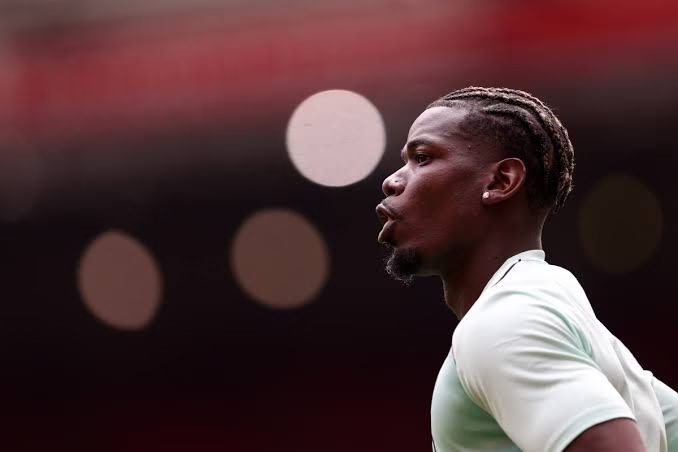
There was a period when Paul Pogba appeared destined to become one of the defining midfielders of his generation. He possessed almost every physical and technical attribute a modern footballer could want: power, height, balance, close control, long-range passing, creativity, and the ability to score spectacular goals. At his best, Pogba could dominate a midfield without appearing to exert himself. He could escape pressure, carry the ball over long distances, produce passes that altered the direction of an entire attack, and arrive in dangerous positions as a genuine goalscoring threat. Few midfielders of his generation possessed such a complete collection of natural gifts, which is precisely why the current uncertainty surrounding his future at AS Monaco feels so significant.
The reported Paul Pogba contract termination situation must, however, be described carefully. Unless and until AS Monaco officially confirms that his contract has been terminated, it is more accurate to refer to reports of discussions over an early separation rather than present the termination as an established fact. Yet even with that important qualification, the wider story is deeply troubling for Pogba. Monaco represented an opportunity to rebuild after years dominated by injuries, suspension, and inactivity. Instead, his attempt to restart his career has again been undermined by fitness problems, leaving his future uncertain at a stage when time is becoming an increasingly unforgiving opponent.
This is why Pogba’s story cannot be reduced to a simplistic argument about whether he was a success or failure. He won the FIFA World Cup with France, became a multiple-time Serie A champion, won major trophies with Manchester United and, at one stage, became the world’s most expensive footballer. Those achievements alone ensure that describing his career as a failure would be intellectually dishonest. Yet it is equally difficult to argue that Pogba fully realized the extraordinary potential that made him one of the most exciting young players in world football. The uncomfortable truth is that his career contains genuine greatness and genuine underachievement, and the two cannot be separated.
The deepest question surrounding Paul Pogba is therefore not whether he was talented enough. That debate was settled many years ago. The real question is whether he ever built the consistency, durability, and footballing discipline required to transform extraordinary talent into sustained greatness. His career has been shaped by several factors: changing environments, unstable clubs, difficult relationships with managers, recurring injuries, public scrutiny, off-field controversy and, at times, his own inability to deliver the same level consistently. The result is one of the most fascinating and frustrating careers in modern football.
Paul Pogba Career: From a Gifted Teenager to Manchester United’s Lost Jewel
Paul Pogba’s rise began in France, where he developed through youth football before joining Le Havre. His ability attracted attention at an early age, and Manchester United eventually secured his services as a teenager in 2009. At Old Trafford, Pogba was regarded as one of the most promising midfielders in the academy. He was physically advanced for his age and technically superior to many players around him, but his journey into Manchester United’s senior team was complicated by the realities of competing at one of the world’s biggest clubs.
Sir Alex Ferguson had experienced midfielders available to him, and Pogba wanted a clearer pathway to first-team football. The young Frenchman eventually decided that remaining patient at United was no longer the best option for his development. In 2012, he left England for Juventus, a decision that would dramatically alter his career and eventually become one of Manchester United’s most embarrassing transfer mistakes. At the time, Pogba was leaving as a talented prospect. Within only a few years, United would return to Turin and spend a world-record fee to bring him back.
The decision to leave should not simply be viewed as an act of impatience. Pogba believed that he needed opportunities, and Juventus provided them. The move demonstrated an important quality in the young player: he was willing to leave the comfort and prestige of Manchester United in pursuit of regular football. The gamble worked spectacularly. Instead of disappearing into European football as many young players do after major transfers, Pogba developed into one of the most highly rated midfielders on the continent.
Paul Pogba Juventus: Where the Extraordinary Talent Became Real
Pogba’s first spell at Juventus remains arguably the strongest sustained period of his club career. In Turin, he developed from a promising teenager into an elite midfielder playing for one of Europe’s most successful clubs. Juventus did not simply throw him into the team and hope that his talent would solve everything. Pogba developed inside a successful structure alongside experienced players, and the environment allowed his qualities to flourish without requiring him to become the sole solution to every problem.
During that first Juventus spell, Pogba won four consecutive Serie A titles and several other domestic honors. He also became an important part of a Juventus team that reached the Champions League final in 2015. His performances transformed his reputation. He was no longer simply a talented former Manchester United youngster; he had become one of the most exciting midfielders in world football. His combination of size and technique was particularly unusual. Pogba could overpower opponents, but he also had the touch and imagination of a far smaller attacking midfielder.

This was the version of Paul Pogba that created enormous expectations. He could play from deep, advance through midfield, create chances, and score from distance. He had the confidence to attempt difficult passes and the technical quality to execute them. At Juventus, those risks were often absorbed by a strong team structure, allowing Pogba to express himself without carrying the entire tactical responsibility of the side. That environment was important because it revealed both the best of Pogba and a weakness that would become clearer later: he flourished most convincingly when operating within a coherent system.
The success in Italy convinced much of European football that Pogba was destined to become the defining midfielder of his generation. The question was no longer whether he would become a top player. The question was whether he could eventually become one of the truly great midfielders of his era. That expectation followed him back to England, but Manchester United offered a dramatically different environment from the Juventus he had left.
Paul Pogba Manchester United: A Record-Breaking Return Burdened by Impossible Expectations
In 2016, Manchester United paid Juventus approximately £89 million to bring Paul Pogba back to Old Trafford, making him the world’s most expensive footballer at the time. The symbolism of the transfer was unavoidable. United had allowed an extraordinary young player to leave for virtually nothing, only to spend a record fee bringing him home. The transfer was presented as a statement that Manchester United remained capable of attracting the world’s best players, while Pogba was expected to become one of the central figures in the club’s post-Sir Alex Ferguson rebuilding project.
The transfer fee was not Pogba’s responsibility, but it fundamentally changed how he was judged. From that point onward, he was no longer simply assessed as a talented midfielder. Every performance was compared with the money Manchester United had spent. A good performance was treated as an expectation. A poor performance became evidence that he had failed to justify his price. That level of scrutiny would have been difficult for any player, particularly because United themselves were still struggling to establish a coherent identity after Ferguson’s retirement.
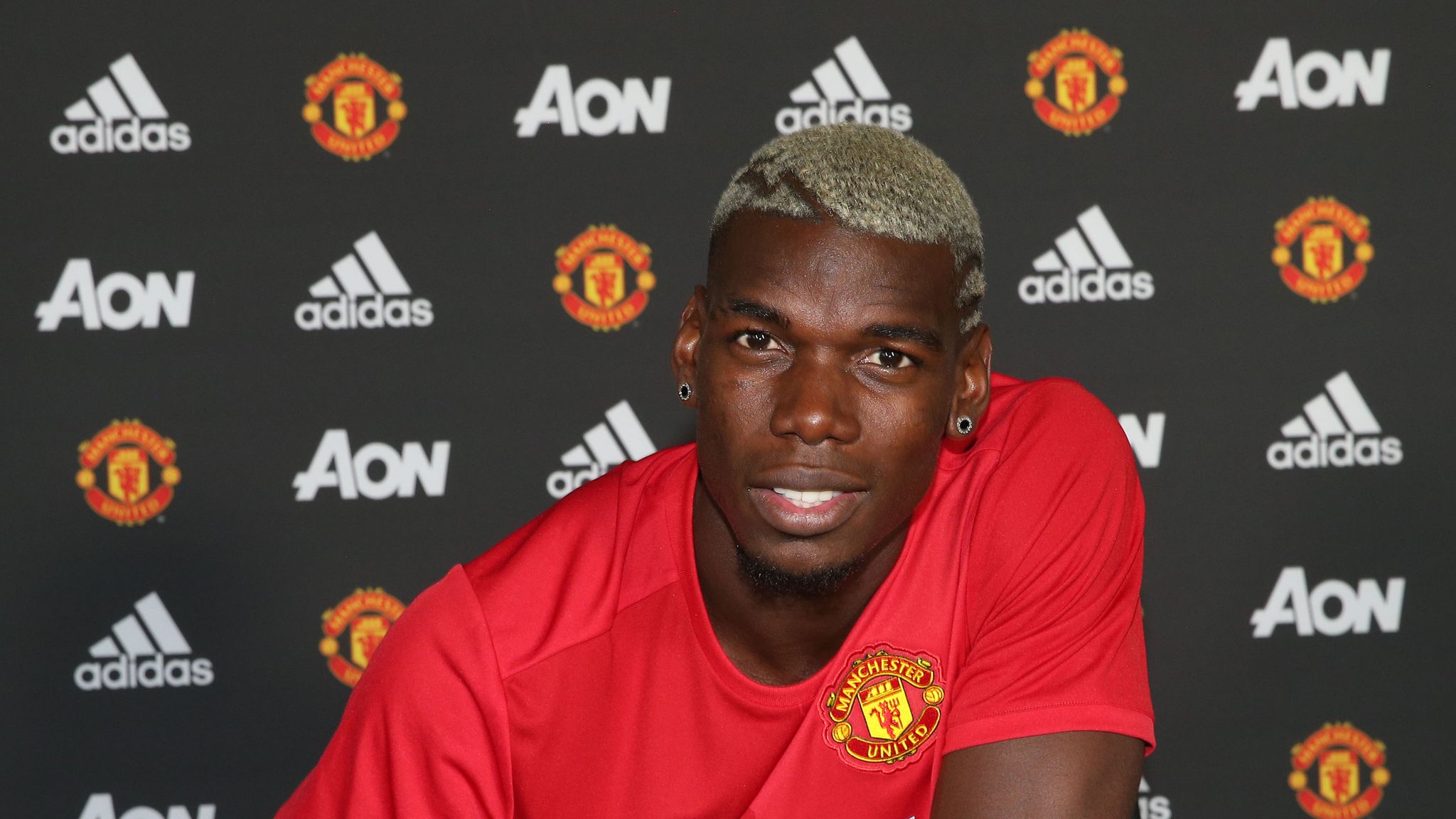
Pogba nevertheless produced important moments during his first season back. Manchester United won the League Cup and Europa League under José Mourinho, giving Pogba major trophies during his return. However, the wider problem quickly emerged. United had not signed Paul Pogba merely to contribute to a successful team; they had signed him to become one of the faces of a new era. The expectation was that he would dominate matches regularly and establish himself among the best midfielders in the world.
That did not happen consistently enough. Pogba could be brilliant one week and frustratingly ineffective the next. He had matches in which his technical superiority was impossible to deny, followed by matches where he struggled to impose himself. The criticism that emerged was therefore not entirely a product of media exaggeration. Manchester United supporters had seen what Pogba was capable of, and their frustration often came from knowing that the extraordinary version of the player existed but did not appear often enough.
Yet blaming Pogba alone would also distort the truth. Manchester United were not a stable football machine during his second spell. Managers changed, systems changed, and midfield partnerships changed. Recruitment was repeatedly questioned, and Pogba was frequently expected to solve structural problems that no individual player could solve alone. He was asked to create, progress the ball, control midfield, and sometimes provide goals, often without the consistent tactical support required to maximize his strengths.
The most honest conclusion is that both Paul Pogba and Manchester United failed each other to some extent. United did not consistently create the environment in which Pogba had thrived at Juventus, but Pogba also did not become the transformational player capable of overcoming the club’s instability through sustained individual excellence. The truth sits uncomfortably between the two arguments.
Mourinho, Solskjær, and the Conflicts That Shaped Pogba’s Old Trafford Story.
Paul Pogba’s relationship with José Mourinho eventually became one of the defining stories of his Manchester United career. Their disagreements were not simply about personality. They reflected deeper disagreements about Pogba’s role, tactical responsibilities, and the level of discipline required within Mourinho’s system. Mourinho wanted control and structure, while Pogba’s best football often came when he had greater freedom to move forward and influence attacking areas.
The tactical issue surrounding Pogba was always complicated. He was not naturally a specialist defensive midfielder, despite frequently possessing the physical attributes associated with the role. Nor was he a conventional central midfielder who could be expected to dictate every aspect of a match from deep positions. Pogba was at his most dangerous when given protection behind him and the freedom to use his technical ability further forward. Juventus had often provided that balance, and France would later do the same.
Manchester United frequently struggled to solve that problem. Pogba’s relationship with Mourinho deteriorated as the team’s difficulties increased, and the conflict eventually became public. Their disputes came to represent something larger than two individuals arguing. They symbolized the dysfunction that had increasingly affected Manchester United during the post-Ferguson period.
When Ole Gunnar Solskjær replaced Mourinho, Paul Pogba initially appeared liberated. There were periods when he produced some of his best football for United and looked capable of finally establishing the consistency supporters had waited years to see. However, the familiar problems returned. Injuries disrupted his momentum, and the debate about his long-term future became a permanent distraction.
That recurring pattern would eventually define his career. Pogba repeatedly demonstrated that he possessed the ability to play at the highest level. The problem was maintaining that level over long periods. Whether caused by injuries, tactical instability, managerial conflict, or inconsistency, the rhythm was repeatedly broken before he could establish a sustained era of dominance.
Paul Pogba and Manchester United Fans: Love, Frustration, and Division.
Pogba’s relationship with Manchester United supporters was complicated because both admiration and criticism were often justified. Many supporters loved him because they recognized his extraordinary ability and believed that he was frequently blamed for problems created by the club’s wider dysfunction. Others became increasingly frustrated because the player they saw occasionally was not the player they received consistently.
Pogba’s public image intensified those debates. He was one of the most recognizable footballers of his generation, comfortable with fashion, social media, and the celebrity culture surrounding elite football. Unfortunately, some criticism focused on superficial issues such as his hairstyles, celebrations, or personality. Those arguments often confused individuality with immaturity and ignored the fact that a footballer can have a strong personality while remaining fully committed to the sport.
However, beneath the shallow criticism was a more serious footballing question. Did Paul Pogba create enough consistency around his extraordinary talent? That is a legitimate question because the greatest players are not judged solely by their spectacular moments. They establish a reliable standard over entire seasons. Supporters know what they are likely to receive, even when those players are not at their absolute best.
Pogba’s ceiling was extraordinarily high, but his performances could fluctuate significantly. That unpredictability became one of the reasons why his Manchester United career remains so divisive. Some supporters remember the spectacular goals, creative passes and dominant performances. Others remember the feeling that a player with his gifts should have controlled far more matches than he ultimately did. Both memories contain elements of truth.
Paul Pogba, France: The World Champion Who Proved His Greatness Was Real.
Any argument that Pogba was simply overrated is impossible to sustain when his international career is examined properly. With France, Paul Pogba achieved the highest honor available in international football by winning the 2018 FIFA World Cup. More importantly, he played a meaningful role in that success and demonstrated qualities that many critics had wanted to see more consistently during his club career.
Within Didier Deschamps’ system, Pogba appeared more disciplined and tactically balanced. France did not require him to solve every midfield problem alone. He operated alongside players whose responsibilities were clearly defined, allowing him to use his strengths while contributing to the collective structure. Pogba’s performance during the tournament demonstrated that he could combine technical expression with tactical responsibility when the environment around him was functioning effectively.
His goal in the World Cup final against Croatia became one of the defining moments of his career. However, reducing his contribution to that single goal would overlook the broader importance of his role. Pogba had become an experienced international player capable of handling enormous pressure, and his success with France confirmed that the great footballer everyone had seen at Juventus was not a myth created by highlights and potential.
Pogba’s international achievements extended beyond the 2018 World Cup. He had previously won the Under-20 World Cup with France in 2013 and later added the UEFA Nations League in 2021. His long involvement with the national team demonstrated that successive French managers valued him, even when his club career became increasingly unstable.
Yet France also deepened the frustration surrounding Pogba. If he could demonstrate maturity, discipline, and influence at the international level, why was his club career so frequently interrupted by inconsistency and instability? Part of the answer lies in the structure around him, but international football cannot explain everything. The uncomfortable reality remains that Pogba reached a level many believed he could sustain throughout his career, but he rarely managed to live at that level for long enough.
Paul Pogba Doping Ban: The Crisis That Threatened to End His Career
Paul Pogba returned to Juventus in 2022 after leaving Manchester United as a free agent. The move appeared to offer another opportunity for a fresh start. He was returning to the club where he had become a superstar, and the expectation was that a familiar environment could help him rediscover his best football.
Instead, his second spell in Turin rapidly became one of the most difficult periods of his career. Injuries severely limited his involvement, preventing him from establishing momentum. Before he could fully recover and rebuild his position in the team, his career was thrown into an even deeper crisis by an anti-doping case.
Pogba tested positive for a prohibited substance following Juventus’ match against Udinese in August 2023. He was initially handed a four-year ban, a punishment that appeared capable of ending his elite career entirely. Pogba maintained that he had not intentionally taken the substance, and the case later went to the Court of Arbitration for Sport.
The eventual reduction of the suspension from four years to 18 months was enormously significant. The CAS ruling accepted arguments relating to the lack of intentional doping, allowing Pogba to return to competitive football in 2025. However, the reduction of the ban did not erase the consequences. Pogba had already lost considerable time through injury, and the suspension removed even more of the competitive football necessary to maintain elite physical and technical standards.
By the time he became eligible to return, Paul Pogba was no longer the 23-year-old midfielder Manchester United had signed for a world-record fee. He was entering his thirties after prolonged periods away from competitive football. The challenge was therefore no longer simply about proving that he remained talented. Everyone already knew that. The challenge was whether his body could allow him to play regularly enough for that talent to matter.
AS Monaco and the Paul Pogba Comeback That Has Struggled to Survive
AS Monaco’s decision to give Pogba another opportunity in 2025 was one of the most interesting comeback stories in modern European football. Monaco knew exactly what they were signing. They were not acquiring the peak Pogba, who had dominated Serie A or become a World Cup winner. They were taking a calculated risk on a player with exceptional ability but a deeply concerning recent history of injuries and inactivity.
For Pogba, Monaco represented something more valuable than a prestigious contract. It represented a chance to rebuild his football identity. After years of negative headlines and uncertainty, he needed an environment in which the focus could return to the pitch. The objective was not necessarily to recreate the player he had been in 2015 or 2018. It was to discover what version of Pogba could still compete effectively at a high level.
Unfortunately, the comeback has struggled to develop. Fitness problems have again limited his involvement, preventing him from building the sequence of appearances necessary to regain rhythm. Reports surrounding the current situation indicate that Monaco and Pogba have discussed an early separation, although the precise contractual position should not be presented as final unless officially confirmed by the club.
This is the brutal reality behind the Paul Pogba contract termination story. Football clubs can take risks on talented players, but sentiment cannot replace availability. Pogba’s name, history, and reputation may earn him opportunities, but no club can build a long-term sporting project around a player who cannot remain consistently fit.
The most damaging aspect of Pogba’s injury history is not simply the number of matches he has missed. It is the repeated destruction of momentum. Every footballer returning from a long absence needs time to regain match sharpness. When another injury arrives before that process is complete, the player effectively begins again. Pogba has been caught in that cycle for years.
Did Paul Pogba Fail to Mature in Football?
This is perhaps the harshest question surrounding his career, but it deserves a serious answer. Maturity should not be measured by hairstyles, social media activity, or whether a footballer displays personality. Those superficial criticisms often distracted from the more important issue.
Football maturity is about consistency, adaptation, and understanding how to maximize one’s abilities over an entire career. It is about finding ways to influence matches even when the conditions are not ideal. It is about developing a reliable standard rather than depending too heavily on inspiration.
Pogba undoubtedly matured in several respects. His performances for France demonstrated tactical responsibility. His success at Juventus showed that he could operate within an elite environment. Winning the World Cup demonstrated his ability to perform under the greatest pressure.
However, it is also reasonable to argue that he never completely matured into the relentlessly dependable superstar his natural ability appeared to promise. Pogba was capable of extraordinary football, but he did not always establish the habits and continuity associated with the most dominant players of an era.
That is the distinction that makes his career so difficult to assess. Pogba was good enough to become one of the greatest midfielders of his generation. He proved that in individual performances and major tournaments. Yet sustained greatness requires more than the ability to reach an extraordinary level. It requires the ability to remain there.
Too often, Pogba’s career was interrupted before that could happen.
Did Manchester United Fail Pogba, or Did Pogba Fail to Fulfil His Own Potential?
The temptation is to choose one side of this argument, but doing so oversimplifies the evidence. Manchester United did not provide Pogba with the same stability he enjoyed during his first Juventus spell. The club was changing managers, changing tactical direction and repeatedly rebuilding its squad. Pogba was often expected to carry responsibilities that should have been shared across a more coherent midfield.
At the same time, Pogba was too talented for all responsibility to be placed on his environment. Great players are not required to have perfect conditions before they can influence football matches. The truly exceptional figures adapt, simplify their games when necessary, and find ways to remain valuable even when they cannot dominate.
Pogba did this at times. He did not do it often enough.
This is not an argument that he lacked commitment or intelligence. It is an argument about the difference between possessing extraordinary ability and constructing an extraordinary career. Several players with less natural talent have built more consistent legacies because they found a dependable level and maintained it year after year.
Pogba’s problem was almost the opposite. His best was so exceptional that anything below it felt disappointing. His own brilliance created the standard against which he would eventually be judged.
Does Paul Pogba Have Unfinished Business?
Pogba unquestionably has unfinished business with football, although that does not necessarily mean he should pursue another emotional return to Manchester United or Juventus. A reunion with either club would generate enormous headlines, but nostalgia is not a serious sporting strategy.
His next move, if Monaco and Pogba formally separate, must be based on reality rather than mythology. He needs a club capable of managing his physical condition carefully and using him in a role suited to the player he is now rather than the player he was at his athletic peak. At 33, Pogba may still possess the passing range, technical quality, and experience required to contribute at a serious level, but the physical demands placed on him may need to change.
The greatest priority is continuity. Pogba needs a sustained period of training and competitive football without another major interruption. Only then can he establish whether there is still a meaningful chapter left in his career.
There is no guarantee that such a comeback will happen. Football history contains remarkable late revivals, but history also shows that repeated injury problems become increasingly difficult to overcome as players age. Pogba’s challenge is therefore not to convince the world that he was once great. His achievements have already established that.
The challenge is to prove that he can still be relevant.
The Way Forward After the Paul Pogba Contract Termination Situation
If Pogba’s relationship with Monaco formally ends, the next decision may be the most important of his career. He cannot afford another move based primarily on reputation, commercial value, or emotional symbolism. The next club must understand the physical reality of signing him and build a role around what he can still offer.
Pogba also faces a difficult personal reality. He can no longer rely on potential to create patience around him. When he was 22 or 23, clubs could wait for him to become even better because his future appeared limitless. At 33, the calculation is completely different. Every injury, every missed match, and every unsuccessful comeback attempt carries greater consequences.
Yet it would still be premature to declare his career over. Pogba possesses technical qualities that do not simply disappear with age. A more controlled role could potentially allow him to contribute if his fitness can be managed. His experience at the highest level could also become valuable within a younger squad.
Everything, however, depends on his body.
Without consistent fitness, the rest of the conversation is meaningless.
Paul Pogba’s Legacy: A Failure, a Success, or Football’s Greatest Contradiction?
Calling Paul Pogba a failure would be ridiculous. He won the World Cup, achieved major domestic success with Juventus, won trophies with Manchester United, and became one of the most recognizable players in world football. Millions of professional footballers would consider even one of those achievements the defining accomplishment of an entire career.
But describing Pogba as a player who completely fulfilled his potential would also be difficult. The reason his career generates such intense debate is that the football world repeatedly saw evidence of what he could become. Juventus saw it. France saw it. Manchester United saw it in flashes.
The extraordinary player was always there.
The continuity was not.
That may ultimately become the defining theme of Pogba’s career. His story was shaped by brilliance, but also by interruption. Just as he appeared ready to establish momentum, something repeatedly disrupted him. Sometimes the cause was injury. Sometimes it was conflict. Sometimes it was inconsistency. Later, the anti-doping suspension removed another enormous portion of his football life.
The reported Paul Pogba contract termination situation at Monaco is therefore more than another transfer development. It represents another moment of reckoning for a footballer whose career has repeatedly forced people to ask the same question.
What if?
What if Manchester United had provided a more stable environment? What if Pogba had remained consistently fit? What if his relationship with Mourinho had developed differently? What if his second Juventus spell had not been destroyed by injury and suspension? What if Monaco’s attempt to rebuild his career had produced the sustained comeback everyone hoped to see?
Those questions are compelling, but football eventually judges players by what actually happened rather than what might have happened.
And what actually happened to Paul Pogba is extraordinary enough to ensure that he will always be remembered. He became a World Cup winner, a champion in Italy, and one of the most talented midfielders of his generation. Yet the same career also contains enough inconsistency, disruption, and unrealized potential to leave an unavoidable sense of regret.
Pogba was not a fraud. He was not simply a victim either. He was an exceptionally gifted footballer whose career was shaped by a complicated combination of external instability, personal decisions, physical decline, and missed opportunities.
If Monaco and Pogba formally part ways, the next chapter will determine whether there is still time for redemption. The challenge is no longer to recreate the young superstar who once dazzled Serie A or to convince the world that he possesses exceptional talent. That argument was settled long ago.
Paul Pogba now has a simpler and much more difficult task: he must find a way to play football consistently again.
Only then will the world discover whether one of the most naturally gifted midfielders of his generation has one final chapter left—or whether the story of Paul Pogba will ultimately remain football’s most fascinating and painful tale of how greatness was achieved but perhaps never fully realized.
About The Author