Shocking Decline: Standard Chartered Bank Job Cuts Signal a New Economic Reality
Standard Chartered job cuts reflect a deeper shift in Kenya’s economy. Discover how workers and graduates can adapt through self-employment, digital skills, and low-capital business opportunities.
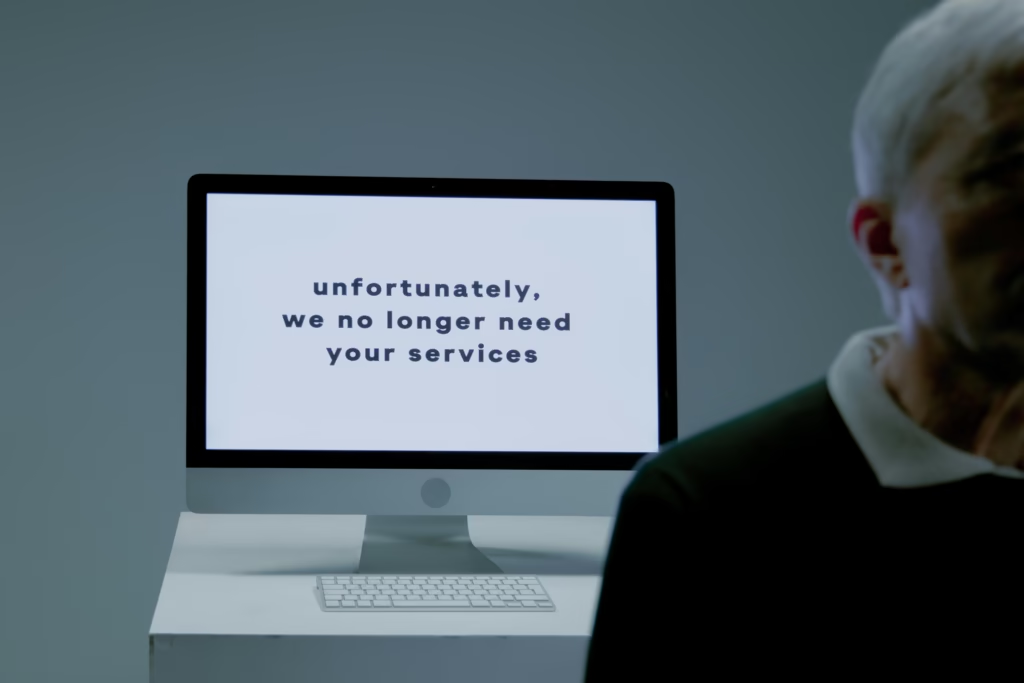
The recent revelation that employee numbers at Standard Chartered Bank have dropped below 1,000 marks more than just a corporate restructuring milestone, it reflects a deeper, more structural transformation within Kenya’s economy. For over a decade, the bank has steadily reduced its workforce, aligning itself with digital transformation, cost efficiency strategies, and shifting global banking models. What was once a prestigious employer with a large workforce has gradually become leaner, more automated, and less dependent on traditional labor.
This development is not isolated. It mirrors a broader trend where formal employment opportunities are shrinking, replaced by automation, outsourcing, and gig-based work. For thousands of Kenyans, especially professionals and graduates, the message is becoming clear: the future of work is no longer guaranteed within the walls of traditional institutions.
Standard Chartered Job Cuts: A Decade-Long Workforce Transformation
The decline in workforce at Standard Chartered is part of an eleven-year restructuring journey driven by technological disruption and changing customer behavior. As digital banking continues to expand, the need for physical branches and large operational teams has diminished. Mobile banking platforms, AI-powered customer service, and automated systems have replaced many roles that were once critical.
The bank’s strategy reflects a global shift in banking: fewer employees, more technology. While this improves efficiency and profitability for the institution, it leaves many employees vulnerable. The situation is particularly challenging in Kenya, where formal sector jobs are already limited.
Relying solely on formal employment is increasingly becoming risky. Workers must begin to view employment not as a permanent state but as a temporary phase within a broader career journey.
The Rise of Self-Employment in Kenya’s Changing Economy
As corporate downsizing continues, Kenya’s labor market is witnessing a quiet but powerful transition toward self-employment. The informal sector already accounts for a large portion of employment, but now even highly educated professionals are being pushed into entrepreneurship.
This shift is not purely negative. It presents an opportunity for innovation, flexibility, and wealth creation. However, it also requires a mindset change. Many individuals are trained to seek jobs rather than create them, which creates friction during this transition.
Self-employment is no longer a fallback option; it is becoming the default path for economic survival and growth.
What Workers Facing Layoffs Must Do Immediately
When layoffs occur, the initial reaction is often panic. However, the difference between those who recover quickly and those who struggle lies in how they respond within the first few weeks.
To begin with, there is a need for financial stabilization. Workers should review their savings, cut unnecessary spending and set up a survival budget. If severance packages are offered, don’t spend them impulsively, instead view them as seed capital for future opportunities.
In addition, emotional resilience counts. Loss of employment can hurt confidence and decision making. Remaining mentally grounded means that people make strategic rather than reactive choices.
Finally, skills assessment is important; workers should identify transferable skills, communication, management, and technical expertise and explore how these skills can be monetized outside of traditional employment.
The importance here is clear: layoffs are not just an economic event, but a moment of change that needs strategic repositioning.
Business Ventures That Require Low Capital Investment
One of the biggest misconceptions about entrepreneurship is that it requires large capital. In reality, many successful ventures begin with minimal resources.
Digital services offer some of the lowest barriers to entry. Freelance writing, social media management, and virtual assistance can be started with just a smartphone or laptop. In Kenya’s growing digital economy, businesses are constantly seeking online visibility, creating demand for such services.
Agribusiness also remains a viable option. Urban farming, poultry keeping, and vegetable supply chains can generate steady income with relatively low startup costs. These ventures benefit from consistent demand, particularly in urban areas.
Retail micro-businesses, such as selling phone accessories, thrift clothing (mitumba), or household essentials, also provide accessible entry points. These businesses thrive on high turnover rather than high margins.
Starting small is not a limitation; it is a strategic advantage that allows experimentation and growth without significant risk.
Innovative Ideas Without Huge Capital
Innovation is not always about groundbreaking technology; it is often about solving everyday problems more efficiently.
One powerful example is service-based innovation. Mobile car wash services, home cleaning, and errand services cater to busy urban populations. These require minimal equipment but can generate consistent income.
Another area is digital product creation. E-books, online courses, and templates can be developed once and sold repeatedly, creating passive income streams.
Additionally, content creation, through platforms like YouTube or TikTok, has emerged as a viable income source. With the right strategy, individuals can monetize through ads, sponsorships, and affiliate marketing.
Innovation is accessible. It does not require large capital but rather creativity, consistency, and understanding of market needs.
Opportunities for Graduates Entering the Job Market
Graduates today face a harsh reality: degrees no longer guarantee jobs. However, this does not mean opportunities are absent; it means they are different.
Instead of focusing solely on job applications, graduates should adopt a dual strategy: job search plus skill monetization. Even while seeking employment, they can engage in freelance work, internships, or small business ventures.

Networking also plays a critical role. Many opportunities are not advertised but shared within professional circles. Building relationships can open doors that traditional applications cannot.
Graduates must think like entrepreneurs from the start. Waiting passively for employment is no longer a viable strategy.
Short Courses That Bridge the Gap to Self-Employment
In a rapidly evolving economy, short courses have become essential tools for survival and growth. Unlike traditional degrees, these courses focus on practical, income-generating skills.
Web design and development are among the most valuable skills today. Businesses need websites, and individuals with these skills do offer services locally and globally.
Graphic design is another high-demand skill. From branding to social media content, companies require visual communication, creating opportunities for designers.
Digital marketing, including SEO and social media management, is increasingly critical as businesses shift online. Those who master these skills will help companies grow while earning income themselves.
Other valuable courses include video editing, data analysis, and coding. These skills not only enhance employability but also enable self-employment.
The implication is profound: short courses are no longer optional; they are essential tools for economic independence.
Building a Sustainable Transition Strategy
Transitioning from formal employment to self-employment is not an overnight process. It requires planning, patience, and persistence.
Individuals should start by building side hustles while still employed, if possible. This reduces risk and provides a testing ground for business ideas.
Financial discipline is equally important. Profits should be reinvested to grow the business rather than spent prematurely.
Moreover, continuous learning is crucial. The market evolves rapidly, and staying relevant requires constant skill upgrades.
The key takeaway is that sustainability comes from strategy, not luck.
The Broader Economic Implications
The decline in employment at Standard Chartered is a tiny illustration of a larger economic shift. Automation, globalization, and digitalization are reshaping industries across the board.
For policymakers, this trend highlights the need to support entrepreneurship, provide access to affordable training, and create an enabling environment for small businesses.
For individuals, it underscores the importance of adaptability. The ability to learn, unlearn, and relearn will define success in this new economy.
Beyond Job Loss: Embracing a New Economic Identity
The reduction of employees at Standard Chartered is not just a corporate story; it is a signal of a new economic era. The traditional model of stable, long-term employment is fading, replaced by a more dynamic, uncertain, but potentially rewarding landscape.
Those who succeed in this environment will be those who embrace change, develop relevant skills, and take proactive steps toward self-reliance.
The future belongs to individuals who can create value independently, adapt quickly, and think strategically. While the transition may be challenging, it also offers unprecedented opportunities for growth and innovation.
About The Author