Manchester United’s Lewis Hall Transfer: The Brutal Problem Behind United’s Priority Left-Back Pursuit
Manchester United are prioritizing the left-back position, with Newcastle United’s Lewis Hall understood to be a leading target. However, Newcastle’s resistance could turn the pursuit into another expensive and frustrating transfer saga.

Manchester United’s search for a new left-back has moved from being a sensible squad-planning exercise to something much closer to an urgent structural problem. The club’s interest in Lewis Hall is not difficult to understand. At 21, the Newcastle United defender represents the profile Manchester United should theoretically be pursuing: young enough to improve, experienced enough to understand Premier League football, technically capable and potentially able to become a long-term solution rather than another temporary patch. The problem, however, is that identifying the right player and actually signing him are two completely different matters, and the current evidence suggests that the Manchester United Lewis Hall transfer is far more complicated than the headlines might initially imply.
Newcastle have already rejected an approach from Manchester United and made their position clear: Hall is not for sale. Sky Sports reported that United made an inquiry that Newcastle turned down, while also confirming that Hall has been a long-term target and that Manchester United are looking for a successor to Luke Shaw. Hall still has significant time remaining on his Newcastle contract, meaning the selling club has little immediate contractual pressure to negotiate.
That reality matters because Manchester United cannot simply behave as though every player they identify is available at the right price. Newcastle have lost important players during this summer and have obvious reasons to protect the core of their squad. The Guardian has also reported that Hall remains of prime interest to Manchester United but that Newcastle’s current manager, Matthias Jaissle, is determined not to lose another key player after a series of significant departures.
The brutal truth, therefore, is that Manchester United may be prioritizing exactly the position they need to strengthen while simultaneously pursuing one of the most difficult deals available in the market. That combination creates a dangerous possibility: another transfer window in which the club correctly diagnoses a weakness but spends too much time chasing a player whose club has no genuine desire to sell.
Why the Manchester United Left-Back Situation Has Become a Serious Concern
For years, the left side of Manchester United’s defense has been shaped by uncertainty. Luke Shaw, at his best, remains a high-level footballer with the technical quality to influence possession, progress the ball, and provide genuine attacking support. The difficulty has never been identifying Shaw’s ability. The difficulty has been depending on it continuously.
A club attempting to compete at the highest level cannot build its long-term defensive structure around the assumption that one player will remain consistently available indefinitely, particularly when that player is approaching the end of his current contract. Sky Sports reported that Shaw has one year remaining on his Manchester United deal, while United’s need for a longer-term successor is a central reason behind their interest in Hall.
The situation has become even more exposed following the departure of Tyrell Malacia, leaving Shaw as the only established senior specialist at left back according to the latest reporting. That is not simply an issue of depth. It is an issue of planning. If Shaw is unavailable, out of form, or unable to sustain a demanding schedule, Manchester United risks entering matches without an equivalent senior specialist ready to take his place.
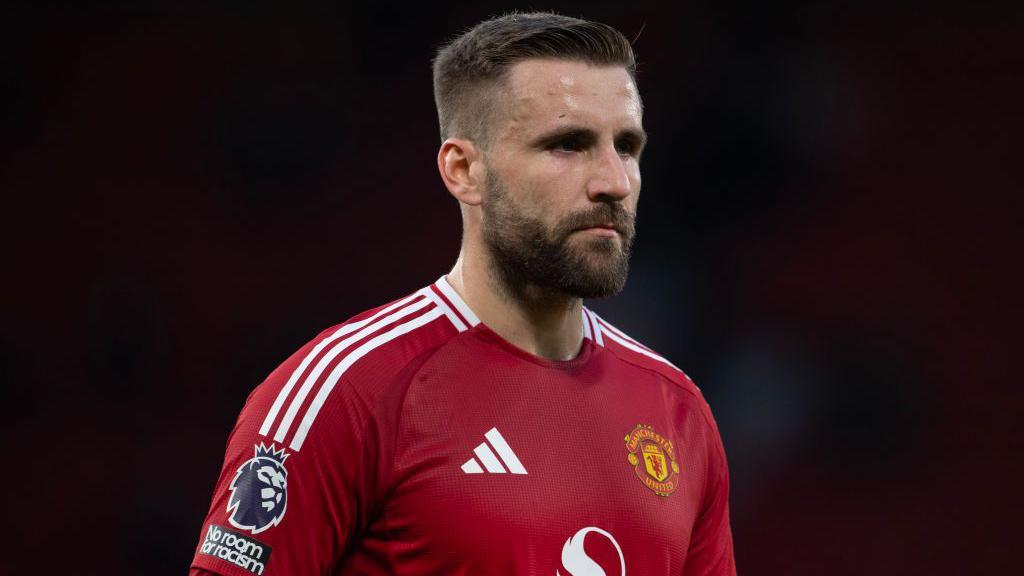
Michael Carrick’s transfer priorities must therefore be judged in this context. If the current manager genuinely believes the squad requires further improvement, a left-back is not a luxury signing designed to satisfy supporters who simply want another new face. It is one of the areas where the balance of the squad appears weakest. Recent reporting indicates that Carrick wants further additions and that left back remains among the positions requiring attention before the transfer window closes.
The negative side of the situation is that Manchester United appear to have allowed themselves to reach this point with remarkably little margin for error. If the Hall deal fails, they must not spend the remaining weeks of the window pretending that the problem has disappeared.
Lewis Hall Transfer: Why Newcastle United’s Resistance Changes Everything
The biggest obstacle to the Manchester United Lewis Hall transfer is not whether the player has enough quality. It is Newcastle’s negotiating position. Manchester United are dealing with a Premier League rival that does not need to sell Hall, values him highly, and has already communicated that he is not available.
That immediately changes the economics of the transfer. Once a buying club approaches a rival for a young, important player who has years remaining on his contract, the selling club controls the conversation. Newcastle are under no obligation to accept what Manchester United consider a reasonable valuation. In fact, if Newcastle genuinely regard Hall as part of their future, the only type of offer capable of changing their position may be one that Manchester United would consider excessive.
This is where the pursuit could become strategically dangerous. Manchester United have spent too many years paying premiums because they have entered negotiations from a position of obvious need. When a club knows that Old Trafford urgently requires reinforcement in a particular position, the price can quickly rise beyond what the player is objectively worth in the wider market.
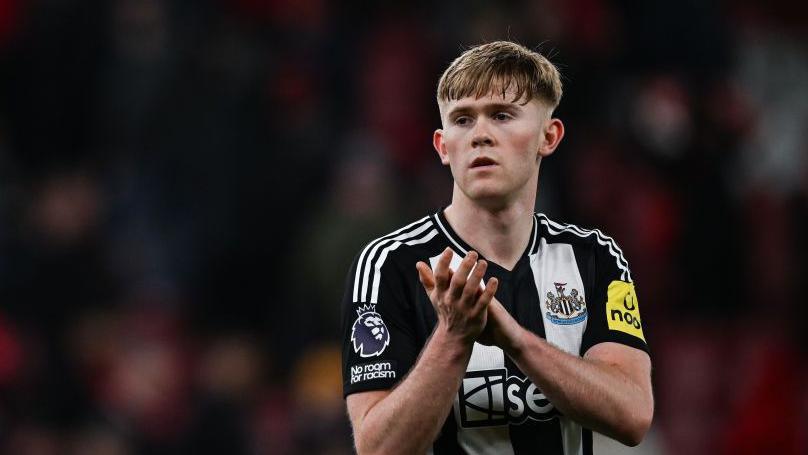
Hall may be an excellent prospect, but excellent prospects can still become bad purchases if the price becomes detached from rational squad-building. Manchester United cannot afford to repeat the old cycle of identifying a weakness, panicking because alternatives were not sufficiently developed and then overpaying for the player who remains available.
The current reports point towards exactly that risk. The Guardian has described Hall as remaining of prime interest to United while Newcastle are resistant to another major departure. Meanwhile, alternative names, including Arsenal’s Myles Lewis-Skelly and RB Leipzig’s David Raum, have entered the conversation.
That suggests Manchester United are not relying exclusively on one target, which is encouraging. However, there is still a significant difference between having alternatives on a scouting list and having a realistic, financially viable transfer strategy ready to execute.
Newcastle United’s Lewis Hall: Why Manchester United Want Him
Hall makes sense as a target because his profile addresses several long-term concerns simultaneously. At 21, he is already accustomed to Premier League football and has developed into an important player for Newcastle. He is not being targeted merely as emergency cover for Shaw. The attraction appears to be the possibility of acquiring a player capable of becoming Manchester United’s first-choice left-back for years.
That is precisely the type of recruitment United should be pursuing. The club has repeatedly suffered from buying players at the wrong point in their development cycle: either experienced names requiring immediate results or expensive prospects whose prices created unrealistic expectations before they had properly established themselves.
Hall potentially offers a different route. He is young but not completely untested. He understands English football, has played in a demanding environment, and still possesses significant developmental upside. Manchester United would not be buying him simply for what he is today. They would be buying the possibility of what he could become over the next five or six years.
That is also why Newcastle’s refusal is entirely logical. Clubs do not willingly sell 21-year-old players with Premier League experience unless there is either a compelling financial reason or the player becomes impossible to retain. Newcastle have already rejected United’s initial approach, and Sky Sports has reported that the Magpies have told Manchester United Hall is not for sale.
From Newcastle’s perspective, selling Hall would create another problem rather than solve one. A replacement would have to be found, integrated, and trusted, potentially at considerable expense. If Manchester United want Newcastle to reconsider, they may have to compensate not only for Hall’s talent but also for the inconvenience and sporting damage his departure would cause.
That is why this is not a normal transfer negotiation. It is a test of whether Manchester United are prepared to pay an extraordinary premium for their preferred solution.
Luke Shaw Replacement: The Decision Manchester United Can No Longer Avoid
The discussion surrounding a new left-back should not be interpreted as an attack on Luke Shaw. The issue is larger than one individual. Manchester United must decide whether they are planning for the future or merely reacting to the present.
Shaw has provided Manchester United with quality when fit, but building another season around the expectation that he will carry the entire position without a senior specialist competing with or supporting him would be a significant gamble. His contract situation adds another layer of uncertainty, making the need for succession planning even more obvious.
The brutal reality is that Manchester United should arguably have been further ahead in this process. Succession planning is supposed to happen before a crisis develops, not after the squad has been reduced to one established specialist.
If Hall arrives, United would have the opportunity to manage Shaw’s workload while gradually developing a new long-term hierarchy. If Hall does not arrive and no credible alternative is signed, the pressure simply returns to Shaw, and the club enters another season hoping that circumstances remain favorable.
Hope is not a recruitment strategy.
Manchester United have spent enormous amounts of money over the years and yet repeatedly found themselves relying on hope in critical positions. They hope players remain fit. They hope young players develop faster than expected. They hope tactical adjustments compensate for squad imbalance. At some point, intelligent recruitment has to replace optimism.
Michael Carrick Transfers Must Be About Structure, Not Headlines
Michael Carrick’s current project cannot be judged purely by the number of players Manchester United sign. A transfer window is not automatically successful because a club adds expensive names. The more important question is whether each signing improves the structure of the team.
Left-back is one of those positions where the structural argument is extremely strong. Carrick needs balance in possession, defensive security, and sufficient depth to survive a long season. If United are competing across multiple competitions, relying on a single senior specialist at left back is an unnecessary risk.
The latest reporting indicates that Carrick believes further recruitment is necessary and that Manchester United are continuing to assess options.
This is where the club’s hierarchy must be brutally honest. If Hall is the dream signing but Newcastle’s position makes the deal financially irrational, Manchester United should move on. There is nothing impressive about spending weeks pursuing a player simply because he was the first choice.
Elite recruitment requires conviction, but it also requires flexibility.
The best sporting departments build shortlists based on different profiles and scenarios. One player may be the ideal long-term signing. Another may offer immediate experience. A third may represent better value. If the preferred deal becomes impossible, the club should be capable of moving quickly rather than beginning its scouting process again in the final days of the window.
Manchester United has reportedly considered alternatives, including David Raum, while Myles Lewis-Skelly has also emerged as a possible option after being offered to United.
Those alternatives, however, create their own questions. Raum would represent a more experienced solution but would not offer the same age profile as Hall. Lewis-Skelly is highly talented, but any decision involving him would require Manchester United to assess whether he is the finished answer at left-back or a versatile young player whose best position could eventually be elsewhere.
The club must avoid buying simply because a player has become available.
Manchester United’s Lewis Hall Transfer Could Become Another Expensive Trap
The greatest danger is not that Manchester United fails to sign Hall. Failure to sign a player is not automatically a failure. The real danger is allowing the pursuit to distort the rest of the transfer strategy.
If United spend the closing stages of the window waiting for Newcastle to change their mind, they could miss other realistic opportunities. If they eventually submit a dramatically inflated bid because the deadline is approaching, they could damage their budget for other positions. If they sign Hall for a price that creates unreasonable expectations, the pressure on a 21-year-old player could become unnecessarily intense.
Manchester United supporters have seen this story before. A player becomes the priority, the media cycle intensifies, alternatives are discussed, and then the club faces a choice between overpaying or walking away.
The smarter decision is not always emotionally satisfying. Supporters naturally want the best available player, particularly when the weakness is obvious. But Manchester United need to become more disciplined than they have been during several previous recruitment cycles.
Newcastle’s position should be respected as a negotiating reality. If they do not want to sell, Manchester United have two options: make an offer genuinely capable of changing that position or pursue another player.
The worst possible approach is uncertainty.
Why the Pressure Is Now on Manchester United’s Recruitment Department
The Hall pursuit is ultimately a test of Manchester United’s recruitment intelligence. Identifying him is relatively easy. Many clubs would recognize his talent and potential. The difficult part is deciding what that talent is actually worth and refusing to allow urgency to destroy financial discipline.
United should already know their maximum valuation. They should know precisely how much they are prepared to spend and exactly when they will walk away. If Newcastle’s demands exceed that figure, the club should activate another target without hesitation.
That may sound simple, but Manchester United’s recent history has demonstrated how difficult it can be in practice. The club has often operated as though the transfer market becomes more logical once the pressure increases. Usually, the opposite is true.
Prices rise. Selling clubs become less willing to negotiate. Agents gain leverage. Supporters demand action. The buying club begins making decisions based on fear rather than strategy.
The Lewis Hall transfer situation is therefore bigger than one left-back. It represents an opportunity for Manchester United to demonstrate that their recruitment operation has genuinely changed.
If Hall is available at a sensible price, he could be an outstanding long-term acquisition. If Newcastle demands a figure that makes no strategic sense, Manchester United should be confident enough to walk away.
That would not be weakness. It would be evidence of competence.
The Brutal Verdict on Manchester United’s Left-Back Priority
Manchester United are right to prioritize the left-back position. The current squad situation makes that clear, and the need for a long-term plan beyond Luke Shaw is increasingly difficult to ignore. Lewis Hall fits many of the characteristics Manchester United should want in a modern signing: youth, Premier League experience, technical ability, and considerable room for development.
But wanting Hall and getting Hall are entirely different matters.
Newcastle has already rejected Manchester United’s approach and publicly established a firm position that their young left-back is not for sale. The broader circumstances also make Newcastle’s resistance understandable. After losing important players, they have little incentive to weaken another area of their squad, particularly by selling to a Premier League rival.
That leaves Manchester United facing a difficult decision. They can attempt to test Newcastle’s resolve with a major offer, potentially paying a premium for their preferred target, or they can demonstrate that their scouting department has developed credible alternatives.
The wrong decision would be to drift.
Manchester United cannot afford another window in which an obvious weakness is acknowledged but not properly solved because the preferred target proves too difficult. If the Lewis Hall transfer becomes possible at a price that reflects both his quality and his potential, the club should seriously pursue it. He has the profile to become an important part of Manchester United’s future.
If Newcastle refuses to sell except for an extraordinary fee, however, United must be ruthless enough to walk away.
The priority should not be Lewis Hall at any cost. The priority should be fixing the left-back position permanently and intelligently. That distinction could determine whether this transfer window is remembered as evidence of a smarter Manchester United or yet another example of a club that recognized its problem but still struggled to solve it.
About The Author