Devastating Marcus Rashford Improvement Exposes Manchester United’s Benjamin Šeško Transfer Crisis
Marcus Rashford improvement at Barcelona has indirectly intensified Bayern Munich’s admiration for Benjamin Sesko, creating another major headache for Manchester United. This in-depth analysis examines why Rashford’s resurgence changes perceptions of United’s recruitment, what Bayern really wants, and whether United can afford to lose one of their most promising strikers.
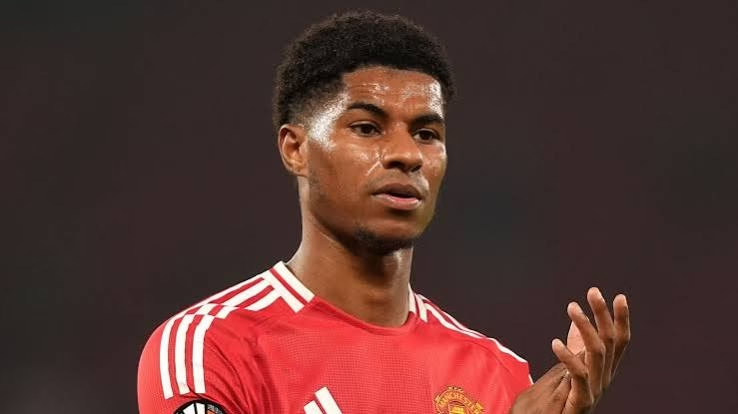
Manchester United have spent well over a decade searching for stability, yet every transfer window seems to expose another structural weakness that extends far beyond buying or selling players. The latest developments surrounding Marcus Rashford and Benjamin Šeško are a perfect example. On the surface, the stories appear unrelated. Rashford is rebuilding his career after leaving Old Trafford, while Šeško is emerging as one of the most promising young strikers in European football. Dig deeper, however, and the two narratives become intertwined in a way that should concern everyone associated with Manchester United.
Rashford’s resurgence has once again forced football observers to question why players who struggle at Old Trafford often rediscover their best form elsewhere. At the same time, reports linking Bayern Munich with long-term admiration for Benjamin Šeško have highlighted another recurring problem for the English giants: whenever a talented young player begins fulfilling his potential, Europe’s elite inevitably circle. Whether Bayern ultimately make a formal move is another matter entirely, but sustained interest from one of football’s best-run clubs is enough to raise uncomfortable questions about Manchester United’s ability to build rather than continually rebuild.
The timing could hardly be worse. Manchester United are attempting to restore credibility after years of inconsistent recruitment, expensive mistakes, and repeated managerial changes. The club cannot afford another situation where promising talent becomes the subject of constant speculation before a competitive project has even been firmly established. Rashford’s revival and Bayern’s reported admiration for Šeško are therefore not isolated transfer stories. Together, they expose deeper concerns about Manchester United’s football strategy, long-term planning, and ability to convince elite players that Old Trafford remains the ideal place to achieve sustained success.
Marcus Rashford’s Improvement Has Completely Changed the Conversation
Only a year ago, many supporters believed Marcus Rashford’s Manchester United career had reached its natural conclusion. His performances had deteriorated dramatically after an outstanding 2022–23 campaign, and confidence appeared to disappear with every passing match. His decision-making became erratic, his finishing lacked conviction, and his overall influence on games diminished to the point where criticism became relentless. Some questioned his commitment, others blamed the tactical environment, while many simply concluded that his best football was behind him.
His move away from Old Trafford has challenged those assumptions. Working in a different tactical structure and under a fresh coaching environment, Rashford has looked revitalized. His movement has become more purposeful, his confidence in one-versus-one situations has returned, and his attacking output has improved noticeably. While it would be premature to declare that he has returned to the peak of his career, there is little doubt that he has reminded Europe of the qualities that once made him one of the Premier League’s most feared forwards.
For Manchester United, this creates an awkward narrative. Every strong performance from Rashford inevitably invites comparisons with the version supporters watched during his difficult final months at Old Trafford. Instead of reinforcing the belief that selling or allowing him to leave was the correct football decision, his improvement raises broader questions about whether the club consistently provides the right environment for talented players to flourish. That is perhaps the most damaging conclusion because it shifts scrutiny away from individuals and towards the institution itself.
Benjamin Šeško Has Become One of Europe’s Most Valuable Young Strikers
Benjamin Šeško has long been regarded as one of the brightest young center-forwards in European football. Long before Manchester United entered the conversation, scouts across the continent admired his rare combination of physical presence, technical quality, and athleticism. Standing well over six feet tall while possessing exceptional pace and mobility, the Slovenian international represents the modern striker profile that virtually every elite club is searching for.
Unlike traditional target men, Šeško is equally comfortable stretching defensive lines with intelligent runs into space or linking play between midfield and attack. His ability to finish with either foot, attack aerial crosses, and press aggressively without possession makes him particularly attractive to coaches who demand tactical flexibility. These qualities explain why several of Europe’s biggest clubs monitored his development throughout his rise in Austria and Germany before Manchester United eventually secured his signature.
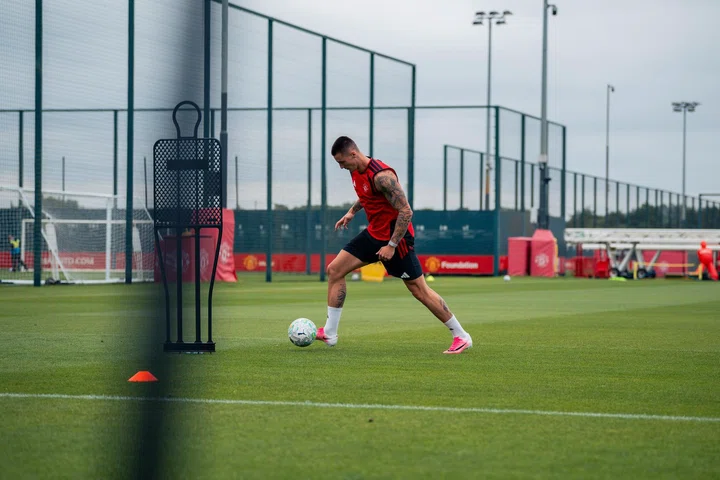
Adapting to English football, however, was never going to be straightforward. The Premier League remains one of the most physically demanding competitions in world football, particularly for young forwards expected to shoulder goalscoring responsibility immediately.
Like many talented attackers before him, Šeško experienced periods of inconsistency while adjusting to the intensity, tactical complexity, and relentless scrutiny that accompany life at Manchester United. Those early struggles inevitably generated criticism, but they also obscured the steady improvements taking place beneath the surface.
As the season progressed, those improvements became increasingly visible. His movement inside the penalty area became sharper, his link-up play developed significantly, and his decision-making under pressure showed growing maturity. Rather than chasing impossible opportunities, he began selecting moments more intelligently, allowing his natural finishing ability to become more effective. Those developments have reinforced the belief held by many scouts that his ceiling remains exceptionally high, provided he continues receiving patient coaching and tactical support.
Why Bayern Munich Continues Monitoring Benjamin Šeško
Reports linking Bayern Munich with Benjamin Šeško should not be dismissed as ordinary transfer speculation because Bayern’s recruitment model differs fundamentally from that of many European rivals. The German champions rarely pursue players simply because they are enjoying a brief spell of impressive form. Instead, they spend years identifying potential successors for key positions, carefully monitoring development before deciding whether circumstances justify making a formal approach.
Harry Kane remains Bayern Munich’s undisputed first-choice striker and continues performing at an elite level. Nevertheless, succession planning has always been central to Bayern’s long-term strategy. The club understands that waiting until a legendary player declines often creates expensive and unnecessary pressure in the transfer market. Monitoring younger alternatives long before they become available is therefore standard practice rather than an indication that an immediate transfer is imminent.
Šeško fits almost every characteristic Bayern traditionally values in a long-term center forward. He possesses the physical profile to dominate Bundesliga defenders, the technical ability to contribute in possession-based football, and the tactical intelligence required to function within structured attacking systems. Most importantly, his age means he still has considerable room for development, making him an attractive investment for any club thinking beyond the next transfer window.
Current reports, however, stop well short of suggesting Bayern are actively negotiating with Manchester United. The available information indicates sustained admiration rather than advanced discussions or formal bids. That distinction is important because transfer speculation often escalates far beyond the underlying facts. Nevertheless, continued monitoring by one of Europe’s most successful clubs inevitably increases external attention and reinforces Šeško’s growing reputation as one of football’s most promising young strikers.
Marcus Rashford’s Revival Raises Serious Questions About Manchester United’s Football Structure
Perhaps the most uncomfortable aspect of Marcus Rashford’s resurgence is not that he is performing well away from Old Trafford. Football history is full of players who rediscovered themselves after changing clubs. The real issue is that Rashford is becoming another example in a growing pattern that Manchester United cannot continue to ignore. Over the past decade, several players who struggled to meet expectations at Old Trafford have looked significantly more comfortable once they entered environments with clearer tactical identities and greater organizational stability. While every individual case has its own context, the recurring nature of the problem suggests that Manchester United’s challenges have often extended beyond the players themselves.
Football clubs at the highest level are expected to maximize the potential of elite talent rather than merely acquire it. Recruitment is only one component of sustained success; development, tactical integration, and long-term planning are equally important. Rashford’s improvement inevitably prompts questions about whether Manchester United consistently create conditions that allow gifted players to thrive. When a home-grown academy graduate appears more confident and decisive after leaving, the criticism naturally shifts towards the club’s football operations rather than solely the individual.
This is particularly significant because Rashford was never an ordinary player for Manchester United. He represented the academy pathway, understood the culture of the club, and had already demonstrated that he could perform at the highest level. If a player with those advantages struggled to maintain consistency, it raises broader concerns about how newcomers such as Benjamin Šeško are being supported during the most critical stages of their development.
Benjamin Šeško Cannot Become Another Long-Term Regret
Manchester United have made costly mistakes in the transfer market for years, but one of their greatest weaknesses has been the inability to exercise patience with young talent. The modern football environment encourages immediate judgments, particularly at clubs where every performance generates intense media scrutiny. Young players are frequently labeled either future superstars or expensive failures after only a handful of matches, leaving little room for the natural development process that elite football increasingly demands.
Šeško should not be viewed through that simplistic lens. At just 23 years old, he remains a developing striker rather than a finished product. While supporters naturally expect goals, the role of a modern center forward extends far beyond finishing chances. Pressing intensity, positional awareness, movement between defensive lines, link-up play, and tactical discipline are all areas that typically improve with experience. Judging his long-term value solely by short-term statistics would ignore the qualities that persuaded Manchester United to invest in him in the first place.
Allowing external speculation to distract from that development would be another strategic mistake. Bayern Munich’s reported admiration is understandable because clubs with stable football structures often identify potential before players fully mature. Manchester United, however, should interpret that interest differently. Rather than considering whether they could profit from a future sale, the club should recognize it as independent validation that they possess an asset capable of becoming one of Europe’s leading forwards if managed correctly.
The greatest danger would not be Bayern submitting an offer. The greater danger would be Manchester United once again losing confidence in their own long-term vision before the player reaches his peak.
Why Bayern Munich’s Interest Should Concern United Without Causing Panic
Transfer speculation has become one of football’s most profitable industries. Every expression of admiration is quickly transformed into headlines predicting imminent bids, dramatic negotiations, and inevitable departures. Supporters are therefore right to approach such reports with caution. At present, there is no widely substantiated evidence that Bayern Munich have opened formal negotiations or submitted an official proposal for Benjamin Šeško. Their interest appears to remain part of broader succession planning rather than an immediate attempt to sign the Slovenian striker.
That distinction matters because Bayern have historically monitored numerous players simultaneously before narrowing their priorities. Their recruitment department routinely tracks emerging talent across Europe, particularly in positions where future succession will eventually become necessary. Monitoring a player does not automatically indicate that a transfer is close.
Nevertheless, Manchester United cannot afford to dismiss sustained interest from Bayern simply because it has not progressed into formal talks. Clubs with Bayern’s reputation rarely dedicate long-term scouting resources to players they do not genuinely admire. If Šeško continues developing at his current rate, external attention will almost certainly intensify over the coming seasons.
The appropriate response is therefore neither panic nor complacency. Instead, Manchester United must demonstrate through sporting progress that Old Trafford represents the best environment for Šeško’s continued growth. Elite players generally remain where they believe they can compete for major trophies, work under stable coaching structures, and fulfill their ambitions. If United provides those conditions, transfer speculation becomes significantly less influential.
Manchester United’s Recruitment Strategy Is Finally Being Put to the Test
For years, Manchester United were criticized for prioritizing commercial appeal over coherent squad building. The club frequently spent enormous transfer fees on established names without assembling a balanced team capable of competing consistently with Europe’s elite. Managers changed, recruitment priorities shifted, and expensive signings often became symbols of a broader lack of direction.
Recent transfer windows have suggested a gradual shift towards younger, high-potential players who can develop together over several seasons. That strategy is inherently more sustainable, but it also requires patience from both supporters and club executives. Young footballers improve through continuity, coaching, and experience rather than constant upheaval.
Šeško represents one of the clearest tests of whether Manchester United genuinely believe in that philosophy. If the club remains committed to building around emerging talent, then external interest should strengthen rather than weaken its resolve. Selling promising players at the first sign of significant appreciation would merely repeat mistakes that have prevented sustained progress since Sir Alex Ferguson’s retirement.
Equally important is avoiding unrealistic expectations. Not every young striker develops at the pace of Erling Haaland or Kylian Mbappé. Many of Europe’s greatest forwards required several seasons before consistently producing elite numbers. Manchester United must resist the temptation to evaluate Šeško against impossible standards and instead measure his progress through continuous improvement across every aspect of his game.
The Financial Reality Makes Selling Šeško an Illogical Decision
Even from a purely financial perspective, allowing Benjamin Šeško to leave prematurely would make little sense unless an extraordinary offer arrived. Manchester United invested heavily in acquiring one of Europe’s most highly rated young forwards precisely because players with his profile are becoming increasingly scarce. The transfer market has demonstrated repeatedly that elite strikers command premium fees, particularly when they are entering rather than approaching the peak years of their careers.
Retaining Šeško offers significantly greater long-term value than seeking a quick financial return. Should he continue improving, his sporting contribution could prove far more valuable than any immediate transfer income. Goals, tactical flexibility, and long-term squad stability are difficult to replace, especially when clubs across Europe are competing for a limited pool of world-class center-forwards.
Moreover, repeatedly selling developing talent before projects fully mature sends an unfortunate message to future recruits. Ambitious young players want evidence that a club intends to compete for trophies rather than operate as a stepping stone for Europe’s traditional powerhouses. Demonstrating confidence in players like Šeško would therefore strengthen Manchester United’s credibility in future transfer negotiations.
Rashford’s Success Should Be a Lesson, Not Another Mistake
Marcus Rashford’s resurgence away from Old Trafford should not be interpreted as an embarrassment or an excuse to rewrite history. Football careers are influenced by countless variables, and changes of environment often produce renewed confidence. However, his improvement does expose a recurring issue that Manchester United cannot afford to overlook. Too often, talented footballers have appeared constrained by instability before flourishing elsewhere, raising legitimate concerns about the club’s ability to maximize its own resources.
Benjamin Šeško now represents an opportunity to break that cycle rather than repeat it. Bayern Munich’s reported admiration should be viewed as confirmation that Manchester United possess one of Europe’s most promising young strikers, not as an invitation to entertain transfer speculation. The responsibility now lies with the club to provide the stability, coaching, and competitive project necessary for that potential to become reality.
If Manchester United remain patient, continue improving their football structure, and build consistently around emerging talent, Šeško could become the cornerstone of the next successful era at Old Trafford. If they allow uncertainty, impatience, or short-term thinking to dominate once again, Rashford’s revival may simply become another painful reminder of opportunities that slipped through their hands. For a club desperate to restore its place among Europe’s elite, the choice should be obvious.
About The Author