Crisis Deepens: Mombasa Fuel Clearance Issues Cause Severe Shortages in Kenya
Mombasa fuel clearance issues cause shortages in Kenya, affecting transport, inflation, and business operations while exposing deep inefficiencies in the supply chain.
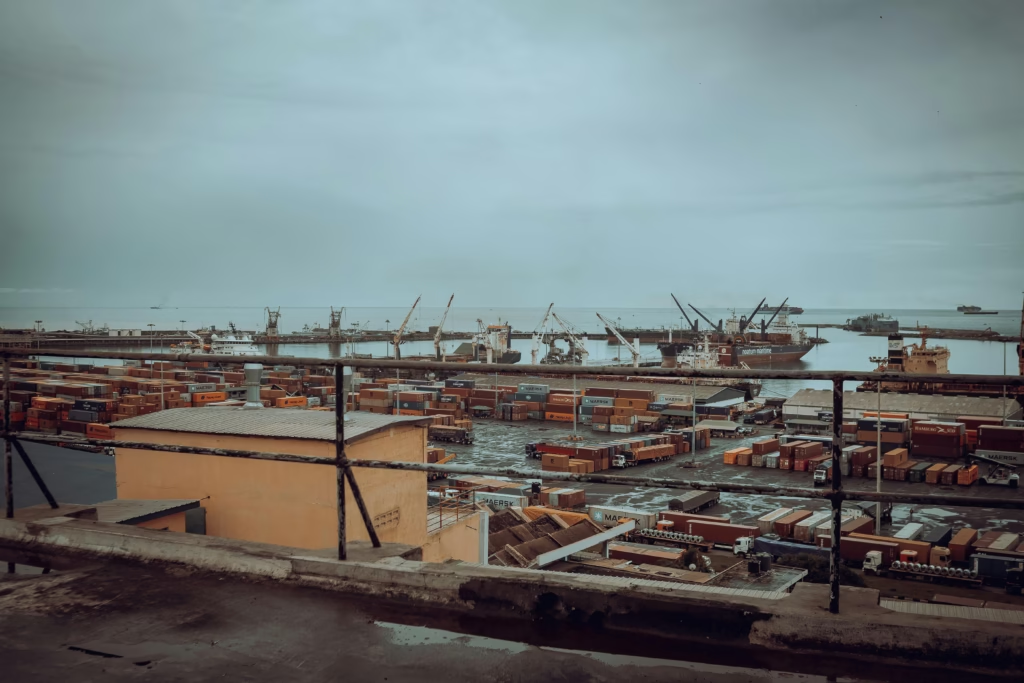
A Strategic Bottleneck Turning Into a National Crisis
Kenya is once again confronting a familiar but increasingly dangerous reality: its economic stability is tightly bound to the efficiency of a single critical gateway. The ongoing disruptions linked to Mombasa fuel clearance issues have evolved from a logistical inconvenience into a full-scale national concern, triggering widespread fuel shortages, disrupting transport networks, and exerting upward pressure on the cost of living. What makes this situation particularly alarming is not just the immediate scarcity of fuel but the exposure of deep structural weaknesses within the country’s energy supply chain.
At the center of this unfolding crisis lies Port of Mombasa, the primary entry point for petroleum imports into Kenya and much of East Africa. Any disruption at this critical node inevitably reverberates across the entire economy. Today, those reverberations are being felt from coastal towns to inland urban centers, where fuel stations are struggling to maintain supply and businesses are grappling with rising operational costs.
Port of Mombasa Delays and the Fragility of a Centralized System
The importance of the Port of Mombasa cannot be overstated. It serves not only Kenya but also acts as a lifeline for several landlocked countries in the region. This centrality, while economically advantageous in times of efficiency, becomes a significant vulnerability when disruptions occur. The current Port of Mombasa delays illustrate just how fragile a highly centralized import system can be.
Ships carrying petroleum products have faced prolonged waiting times before offloading, while bureaucratic bottlenecks in customs clearance have further slowed the movement of fuel into storage facilities. These delays are not isolated technical glitches; they reflect a system under strain, where rising demand is colliding with operational inefficiencies. The result is a backlog that cascades through every stage of the supply chain, ultimately manifesting as empty pumps and frustrated consumers across the country.
Fuel Shortages Kenya Is Experiencing: A Direct Chain Reaction
The emergence of fuel shortages in Kenya that is currently being faced can be traced directly back to these clearance challenges. Fuel does not simply appear at service stations; it moves through a tightly coordinated chain that begins with importation and ends with distribution to retail outlets. When one segment of this chain is disrupted, the entire system falters.
In this case, delays in clearing imported fuel have slowed the rate at which petroleum products are released into the domestic market. As a result, supply has failed to keep pace with demand. This imbalance has led to sporadic shortages in various regions, forcing motorists to search for fuel and businesses to adjust their operations in response to uncertain supply. The situation is particularly severe because Kenya operates with minimal buffer stocks, meaning that even short-term disruptions can quickly escalate into widespread scarcity.
Kenya Fuel Supply Chain Under Strain
The current crisis has placed the Kenya fuel supply chain under intense scrutiny. Under normal circumstances, the system is designed to operate with precision and efficiency, ensuring a steady flow of petroleum products from the port to consumers. However, the events unfolding in Mombasa have revealed just how little margin for error exists within this framework.
The supply chain depends on seamless coordination between multiple entities, including port authorities, customs officials, oil marketers, and pipeline operators. When delays occur at the clearance stage, this coordination breaks down, creating bottlenecks that are difficult to resolve quickly. The absence of significant strategic reserves further exacerbates the problem, leaving the country exposed to supply shocks.
What becomes clear is that the system’s efficiency is also its greatest weakness. It is optimized for smooth operations but lacks the resilience needed to withstand disruptions, making it highly susceptible to crises such as the one currently unfolding.
Petroleum Logistics Kenya: Complexity Meets Constraint
The challenges facing petroleum logistics in Kenya are deeply rooted in the complexity of managing fuel imports and distribution. The process involves a delicate balance of timing, infrastructure, and regulatory compliance. When any part of this system fails to perform optimally, the consequences are immediate and far-reaching.
In the current scenario, congestion at port facilities, delays in documentation, and limitations in storage capacity have combined to create a perfect storm. These factors have slowed the movement of fuel from ships to storage and ultimately to consumers. The logistics network, already operating close to its capacity limits, has struggled to absorb these disruptions, leading to a breakdown in supply continuity.
This situation highlights a critical issue: while Kenya’s logistics system has evolved to handle increasing volumes of fuel imports, it has not developed the flexibility required to adapt to unexpected challenges. As demand continues to grow, this lack of adaptability becomes an increasingly significant risk.
Fuel Import Challenges Kenya Must Confront
Beyond the immediate clearance issues, the crisis also underscores broader fuel import challenges Kenya must address. The country’s reliance on imported petroleum makes it vulnerable to both internal inefficiencies and external pressures. While global market dynamics often receive the most attention, domestic logistical constraints can be just as disruptive.
The current delays point to gaps in regulatory coordination and operational efficiency. Despite efforts to streamline import processes, inconsistencies in implementation continue to create bottlenecks. These challenges are compounded by the scale of demand, which has grown significantly in recent years due to economic expansion and increased energy consumption.
Addressing these issues requires a comprehensive approach that goes beyond short-term fixes. It demands structural reforms aimed at improving efficiency, enhancing capacity, and strengthening coordination across the entire supply chain.
Economic Consequences: Inflation and Business Disruptions
The economic impact of the ongoing fuel shortages is both immediate and profound. Fuel is a fundamental input in nearly every sector of the economy, from transportation and manufacturing to agriculture and retail. When supply is disrupted, the effects ripple outward, influencing prices, productivity, and overall economic activity.
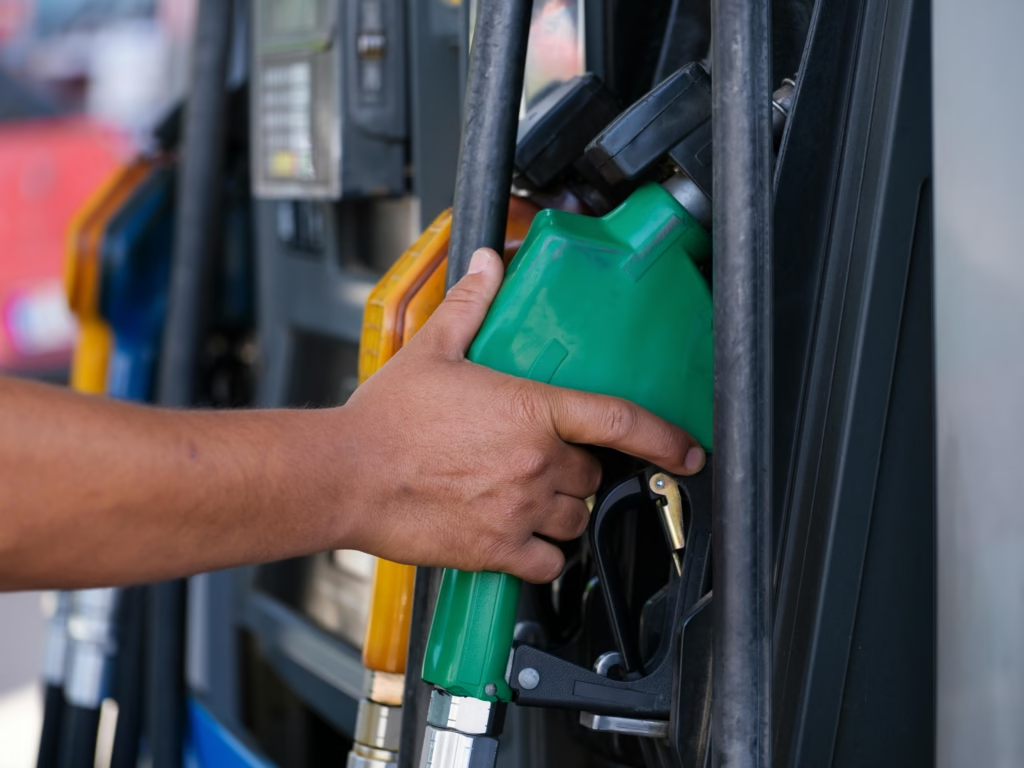
Transport costs are often the first to rise, as operators adjust fares to reflect increased fuel expenses. These higher costs are then passed on to consumers, contributing to inflationary pressures. Businesses, particularly small and medium enterprises, face additional challenges as they grapple with rising operating costs and unpredictable supply conditions.
Over time, these disruptions can erode consumer purchasing power and slow economic growth. The longer the shortages persist, the more difficult it becomes for businesses and households to adapt, increasing the risk of broader economic instability.
Regional Ripple Effects Beyond Kenya
The implications of Mombasa’s fuel clearance issues extend far beyond Kenya’s borders. As a key regional hub, the Port of Mombasa plays a vital role in supplying fuel to neighboring countries. Delays at the port therefore have a cascading effect across East Africa, disrupting supply chains and driving up costs in multiple economies.
Countries that rely on Kenyan infrastructure for fuel imports may experience similar shortages and price increases, highlighting the interconnected nature of the region’s energy systems. This interconnectedness amplifies the importance of resolving clearance issues quickly, as delays in one country can have far-reaching consequences for others.
A Turning Point for Reform and Resilience
The current crisis presents Kenya with a critical opportunity to reassess and strengthen its fuel supply system. While the immediate priority is to resolve clearance delays and restore normal supply levels, the long-term focus must be on building resilience.
This involves investing in infrastructure, streamlining regulatory processes, and enhancing coordination between key stakeholders. It also requires the development of strategic reserves to provide a buffer against future disruptions. Without such measures, the country risks facing recurring shortages that undermine economic stability and growth.
From Vulnerability to Strength
The ongoing situation demonstrates that Mombasa fuel clearance issues are not merely a logistical challenge but a structural vulnerability with significant national and regional implications. The fuel shortages Kenya is currently experiencing are a direct consequence of systemic inefficiencies that demand urgent attention.
Yet within this crisis lies an opportunity. By addressing the root causes and implementing meaningful reforms, Kenya can transform its fuel supply chain into a more robust and resilient system. The path forward will require decisive action, strategic investment, and a commitment to long-term planning.
If these steps are taken, the country can emerge stronger, turning a moment of crisis into a foundation for sustainable growth and stability.
About The Author